
Weng Ming-hui — Taiwan’s Last Remaining Bamboo Shield Craftsman
Weng Ming-hui, a bamboo craft master from Guanmiao District, Tainan City, was born in Dongshi Village, Guanmiao District in 1935. Of Southern Min descent and well-versed in bamboo weaving techniques, he is renowned for weaving bamboo shields. In terms of bamboo selection, he prefers thorny bamboo as his creative material, and he is one of the few early Taiwanese bamboo craft masters who integrated materials such as bamboo, rattan, and cowhide in his creations.
Weng Ming-hui, a bamboo craft master from Guanmiao District, Tainan City, was born in Dongshi Village, Guanmiao District in 1935. Of Southern Min descent and well-versed in bamboo weaving techniques, he is renowned for weaving bamboo shields. In terms of bamboo selection, he prefers thorny bamboo as his creative material, and he is one of the few early Taiwanese bamboo craft masters who integrated materials such as bamboo, rattan, and cowhide in his creations.
The bamboo shields made by Weng Ming-hui are one of the important ritual implements for local zhentou troupes in Tainan. Crafted with meticulous, solid techniques, his bamboo shields are sturdy, durable, and made from locally sourced bamboo. The shields he weaves serve as the required weapons for zhentou troupes such as Songjiang arrays and Golden Lion arrays, allowing Weng Ming-hui to delve deeper into Tainan's traditional culture through his craftsmanship.
In 2015, the Cultural Affairs Bureau of the Tainan City Government conducted oral history records of three major Tainan bamboo craftsmen, Lu Ching-chih, Mo Yung-chung, and Weng Ming-hui, and published them as Weaving Dreams of Bamboo: Techniques of Guanmiao Bamboo Weaving Masters, which is the most complete publication documenting Weng Ming-hui's bamboo weaving techniques to date.
The life of Weng Ming-hui
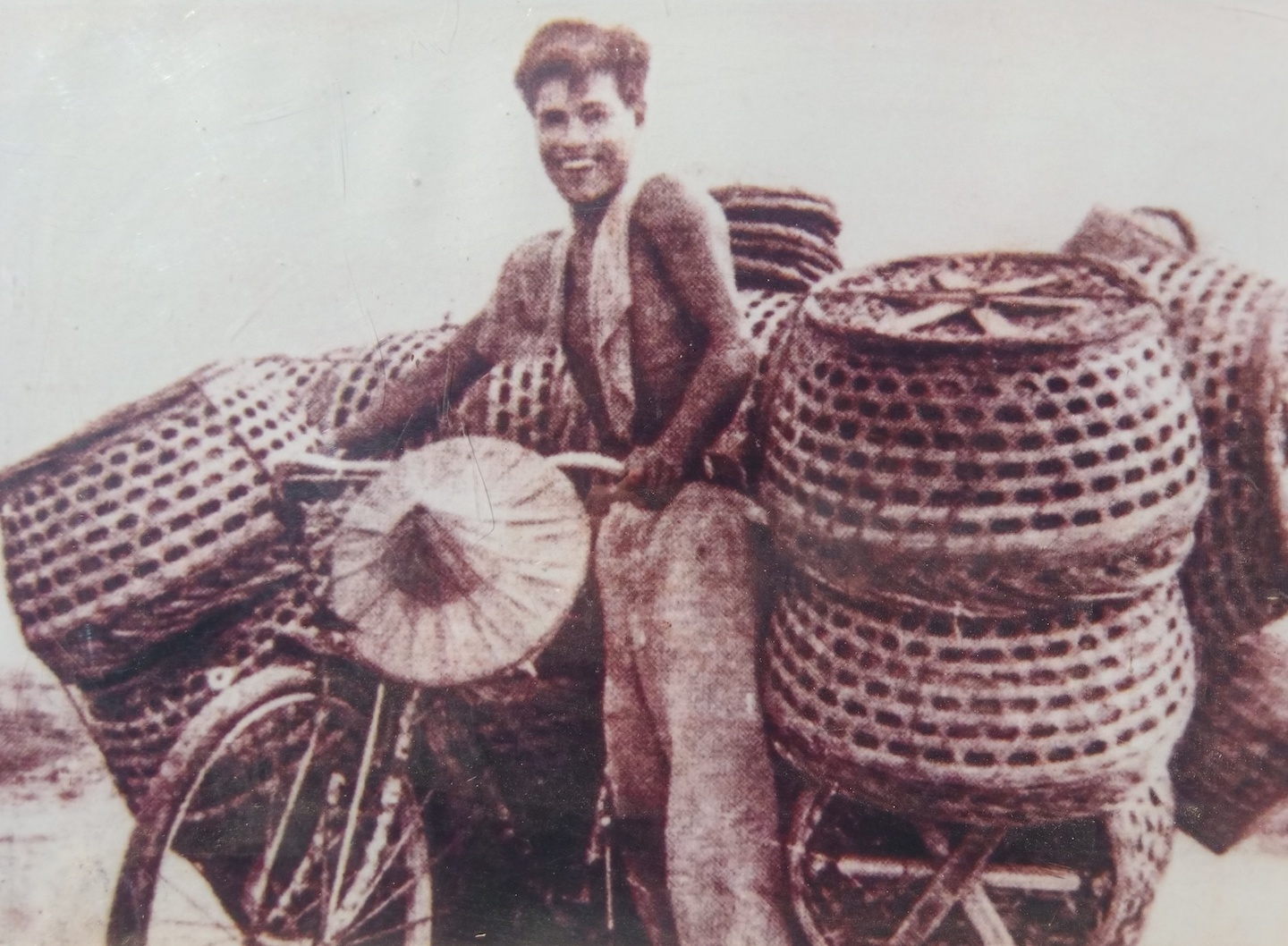
Weng Ming-hui was born in 1935 in Dongshi Village, Guanmiao District, Tainan City. In the late 1940s, after graduating from elementary school, Weng Ming-hui began purchasing bamboo wares with friends and carried them to places such as Gangshan, Qiaotou, Nanzih, Kaohsiung, and Fengshan to sell at markets and bamboo basket fairs (lanzaiguo gatherings), continuing until he enlisted for military service in 1956. In 1969, due to an urgent local temple festival need for bamboo shields, his stepfather sold a borrowed shield. When he needed to make a new one to return, his stepfather developed glaucoma and a severe cold, causing him to go blind in both eyes. Consequently, Weng Ming-hui learned how to make bamboo shields under his stepfather's verbal instructions and his mother's side guidance.
Because Taiwan's bamboo industry flourished in the 1970s and competition was fierce, Weng Ming-hui—who used traditional Taiwanese bamboo weaving techniques to weave bamboo-strip wares, unlike various bamboo art workshops whose technicians inherited fine bamboo craftsmanship—did not thrive as other bamboo artisans did in the 1970s. Moreover, when the bamboo-strip ware business became difficult, he made a living by working on landfill engineering projects, laying waterproof plastic sheets for the plant area, and harvesting bamboo shoots.
Having experienced the off-seasons and peak seasons of bamboo woven crafts as well as market shifts, Weng Ming-hui realized that for the bamboo craft sales business to succeed, it must pair the production and sales of different products with the off and peak seasons to stabilize the economy. Moreover, because the quality of bamboo woven crafts is strongly correlated with the quality of the bamboo material source, Weng Ming-hui also invested in bamboo cultivation to lower material sourcing costs and ensure stable quality.
Although he did not make a large fortune like other bamboo artisans in the 1970s through the export of bamboo strip ware, Weng Ming-hui's persistence in traditional Taiwanese bamboo weaving techniques and his continued creation of bamboo strip items required by Tainan's local culture, such as bamboo shields, have made him Tainan's most representative traditional craft preserver.
In 1987, at the invitation of the 5th Council for Cultural Affairs, he demonstrated bamboo shield weaving at the "Folk Theater" event site. In 1997, he was again invited to demonstrate at the "Taiwan Common Folk Culture Tour" event site. Afterward, in 1998, recommended by the Tainan County Cultural Center, he participated in the 1st Traditional Arts Awards. Starting in 2010, he began assisting units such as the Tainan County Guanhiao Community College in conducting digital documentation of bamboo weaving techniques.
Spanning nearly 60 years of bamboo weaving creation, Weng Ming-hui was appointed as an honorary member by the Tainan City Bamboo Association in 2013. In 2014, Tainan City registered "bamboo and rattan shield making" as a municipal traditional art and recognized Weng Ming-hui as the preserver of this traditional art skill. In 2016, along with Lu Ching-chih and Mo Yung-chung, he was officially included in the book *Long Weaving Bamboo Dreams* as an important bamboo weaving master to document his craft. He is Taiwan's last surviving bamboo artisan who weaves bamboo shields.
(This article was assisted by the Tainan Bamboo Culture Foundation in field research.)