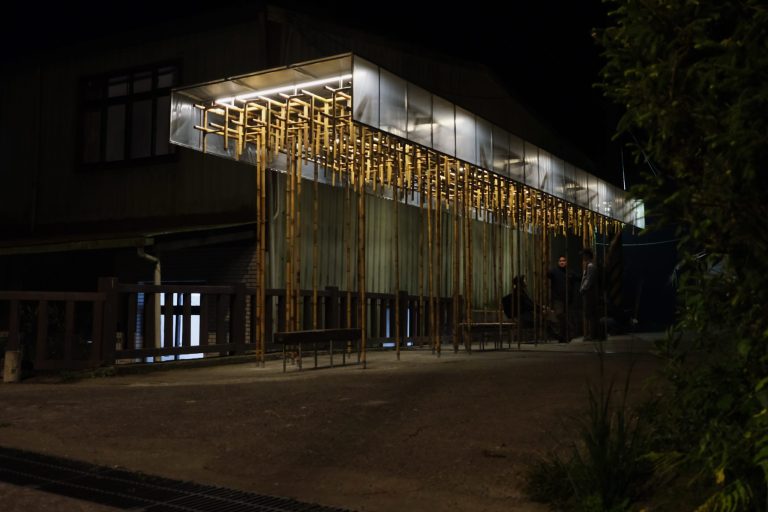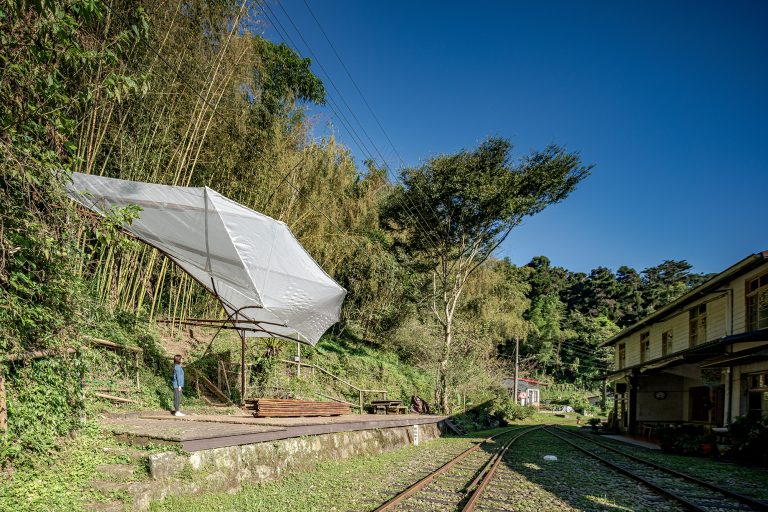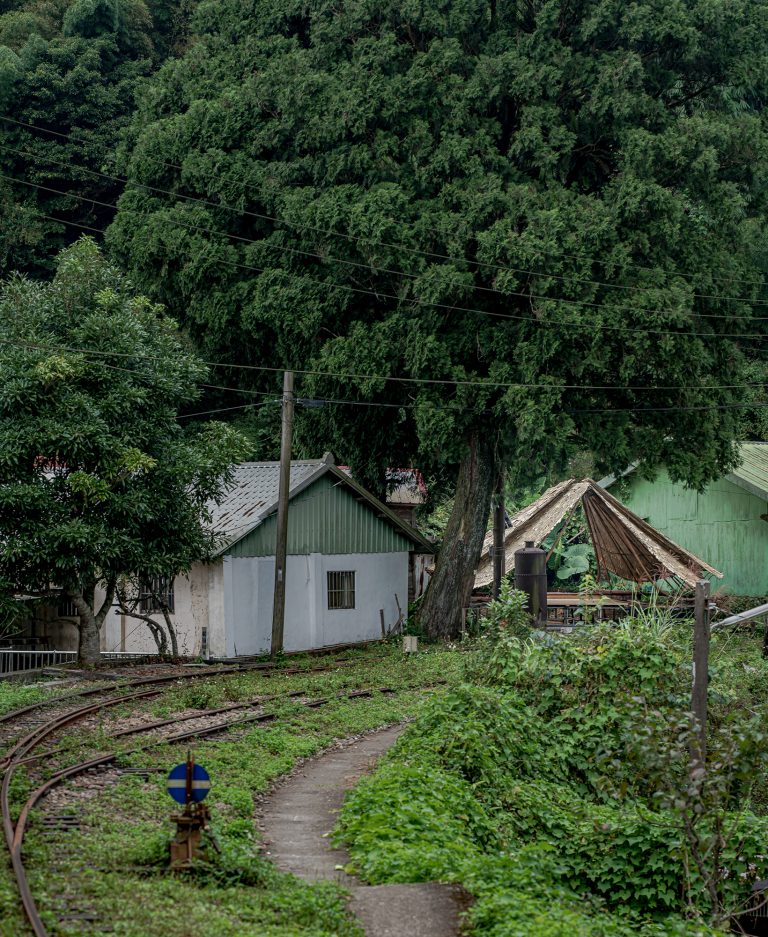
The bamboo construction workshop kicked off with a keynote speech by a key promoter of Taiwan's bamboo architecture development # Gan Mingyuan Architect shares years of experience in bamboo construction: reasons for shifting from timber to bamboo design—using local materials is more environmentally friendly, and the mission of cultural heritage preservation. Facing public doubts about the durability of bamboo structures and challenges of natural bamboo characteristics, how to overcome them one by one through material processing and design innovation. Teacher Gan takes us through each case to see the trajectory of continuous experimentation along the way. Followed by the Graduate Institute of Architecture at National Yang Ming Chiao Tung University # Xu Beixian The professor shared insights and the journey of perseverance in applying bamboo to actual architecture education. Bamboo is readily accessible and can be processed and assembled by hand, making it well-suited for experimental construction education. Once hands-on work begins, many unexpected challenges arise; though arduous, they are deeply memorable. Through a collaboration with Kristof Crolla from the Chinese University of Hong Kong, digital design was introduced, leading to the creation of lightweight, futuristic bamboo structures alongside students and volunteers. Next, they attempted to flip the mindset of designing based on bamboo's material properties, instead conceiving the design first and then challenging the application potential of the bamboo, which ultimately created an interactive, dynamic spatial experience.
The sharing by the two teachers highlights the goals of this project respectively. The six architects from the humanities and social sciences group need to respond to practical needs and face bamboo architecture with both boldness and pragmatism; the school has more freedom and will therefore try to improve techniques and challenge the creation of new experiential spaces.


Apply What You Learn – 1-Hour Design Challenge
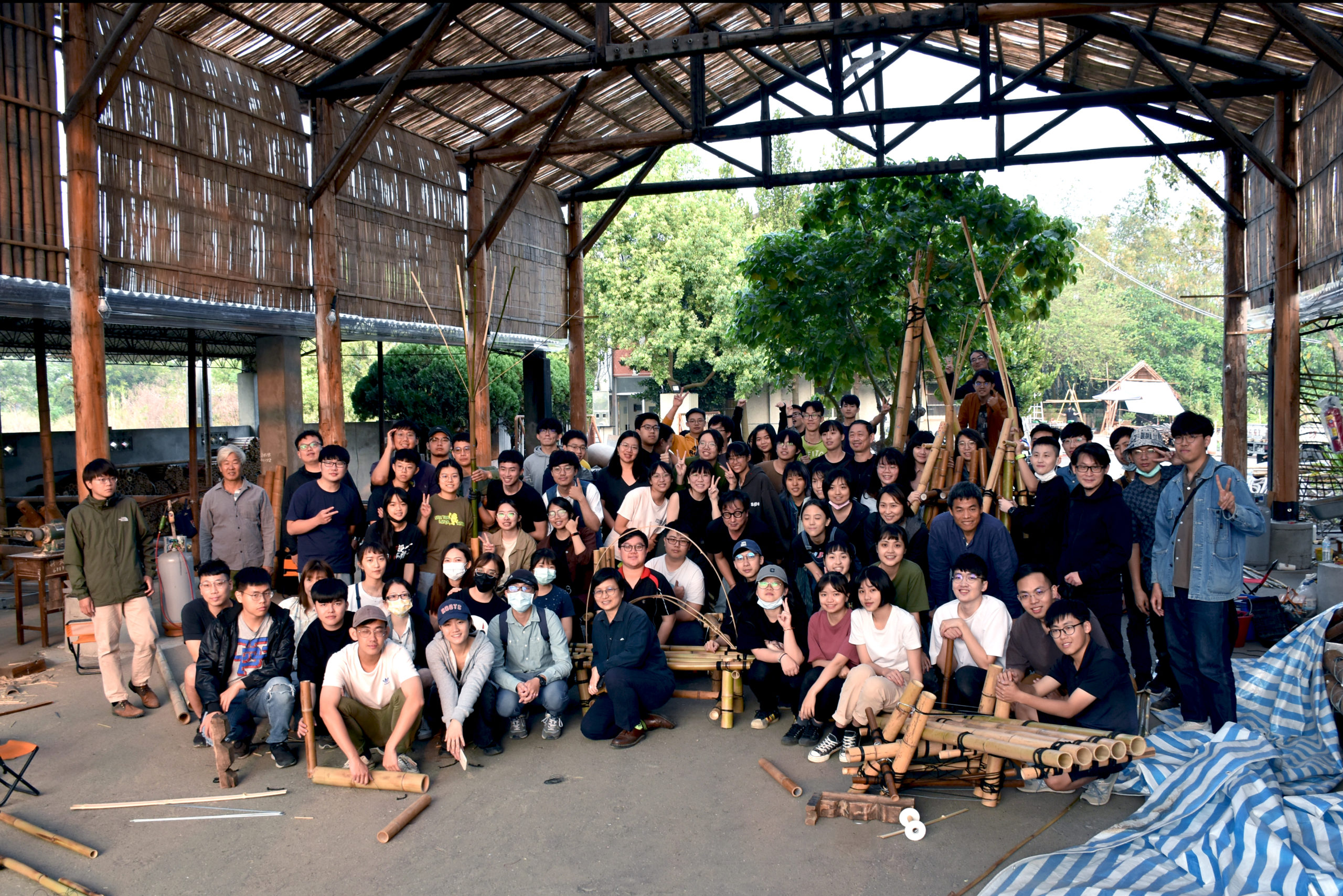
During this two-day hands-on workshop, students learned basic techniques such as bamboo weaving, binding, heat-bending, and splitting bamboo. Putting what they learned into practice immediately helps reinforce their understanding. Therefore, curator #, Instructor Xu Beixian, assigned the students a design project: “A Chair.”
The workshop schedule was very compact. On the first night, there was a potluck networking dinner, and students from various schools were required to submit a design draft for a "chair" before the end of the evening. On the second afternoon, during the final hour leading up to the end of the workshop, they had time to bring their drafts to life and build the chairs.
The challenge of the "chair" project is that, besides aesthetics, structural considerations (weight-bearing capacity) must also be addressed. Interestingly, it seems everyone felt that just a regular chair you can sit on alone is too ordinary. Three different schools independently came up with the idea of "a chair that requires two (or more) people to sit together in order to be fully used." Come and see what kind of chairs the students have created.
The accompanying teachers all said they haven't seen students in such an enthusiastic and energetic state for a long time. Perhaps we should consider whether traditional education needs some changes?! Special thanks to the leading teachers: Jiang Yizhang from Chinese Culture University Architecture, Qiu Yunxiang from National Taiwan University of Science and Technology Architecture, Lin Yuxiang from Ming Chuan University Architecture, Xie Chunyu from Chung Yuan Christian University Interior Design, Kao Hsiao-chien from National Yunlin University of Science and Technology Architecture, and Yang Shih-hung from National Cheng Kung University Architecture.