# To
Concept
Carrying a vital mountain-climbing mission, the small train first moves forward at the switchback,
The worker hurried to switch the tracks, looking back at the path they had just walked, and we moved forward in the opposite direction.
We look at the path we once took, and thinking about whether to go up or down is the question we hope to prompt passengers to consider.
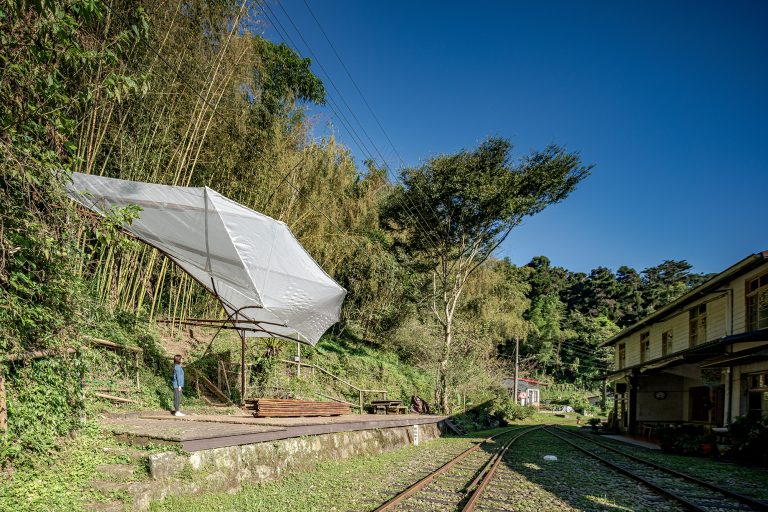
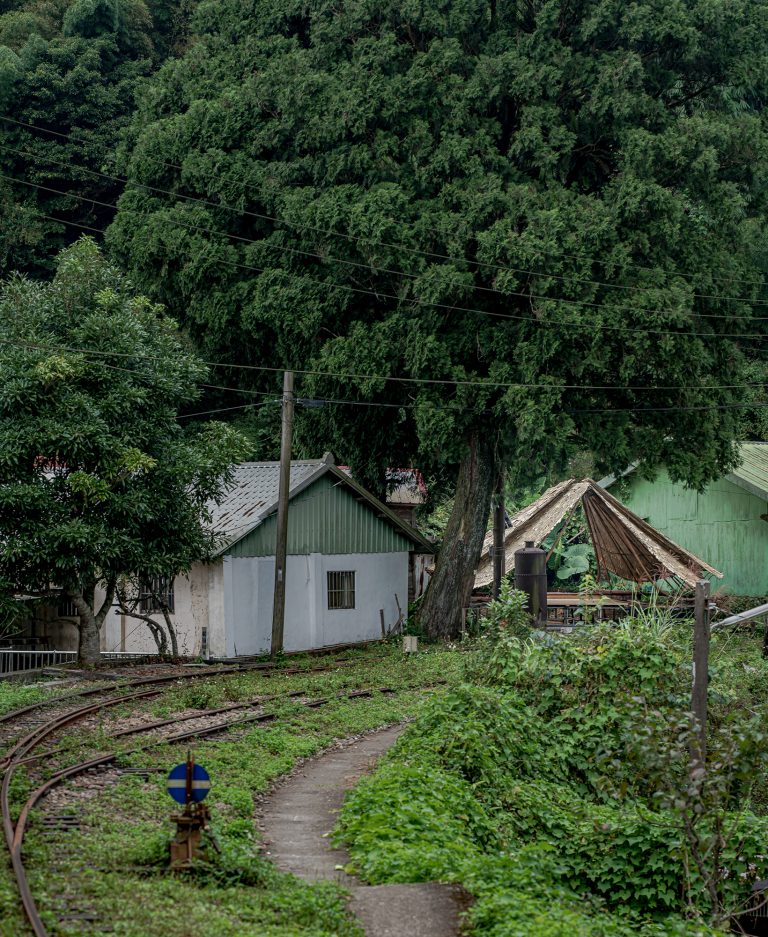
Carrying the identity of a guide, standing at the turning point of Zhuqi, looking back at the history of Chiayi's bamboo township, and rethinking the direction of the future.
Past: Look but don't touch
Reminded of the past by what we see or experience in the present, our mindset and perspectives change over time, making things feel different. The past itself has not changed, and we cannot change the facts of what has already happened; what changes is the past as viewed through our eyes today.
Present: Facing a choice, exploring a way out
The current point in time cannot return to the known past, nor can it peek into the unknown future. Standing in a vague and unsettling present, how do we move forward, facing a future with endless paths waiting to be explored.
Future: Find a breakthrough
Everyone's path of exploring the unknown, experimenting, and going through trials before finding a breakthrough for the future may differ, but that future will eventually become a beam of light in the darkness of life, finding a way out for existence.


# Review
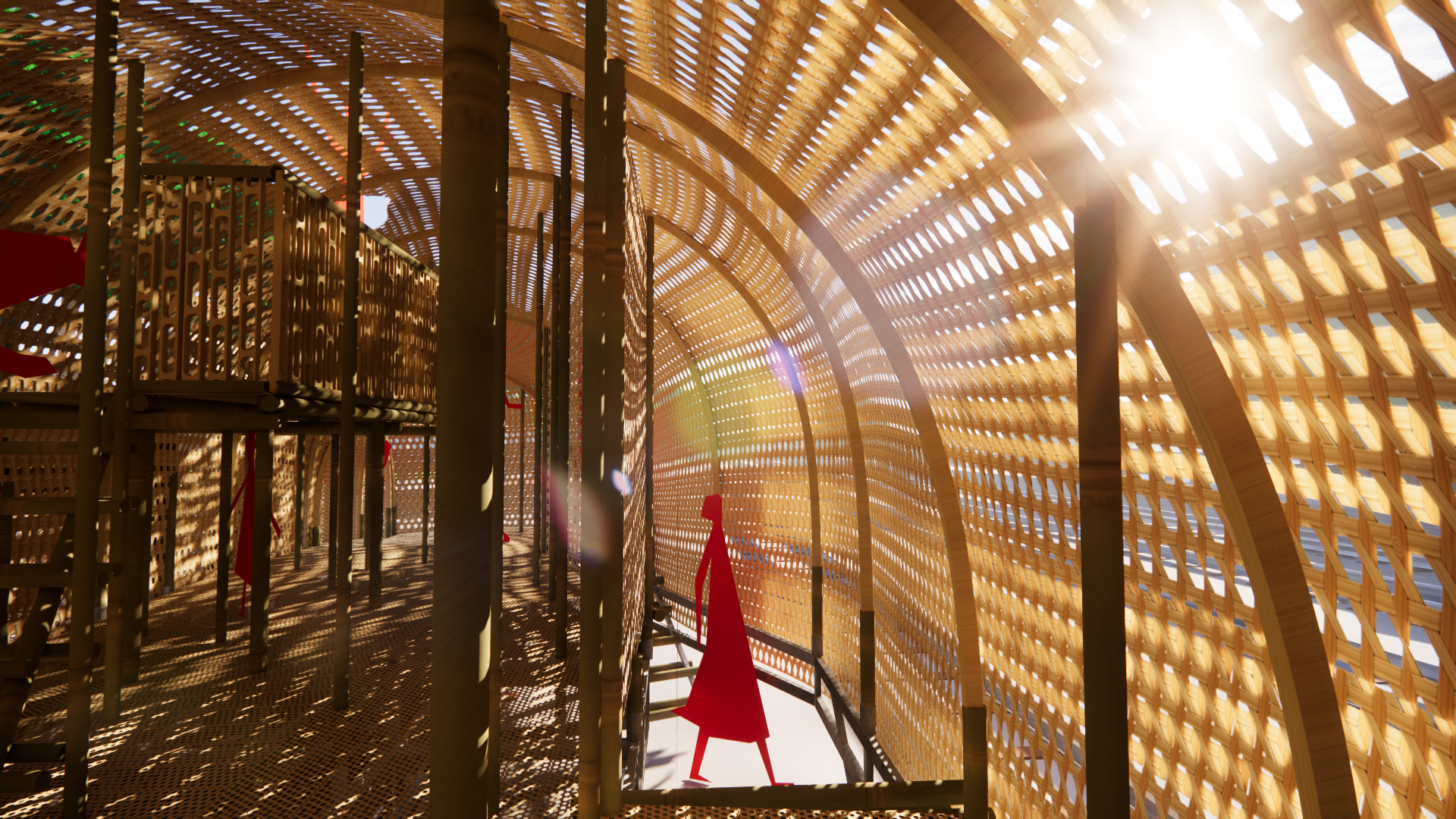
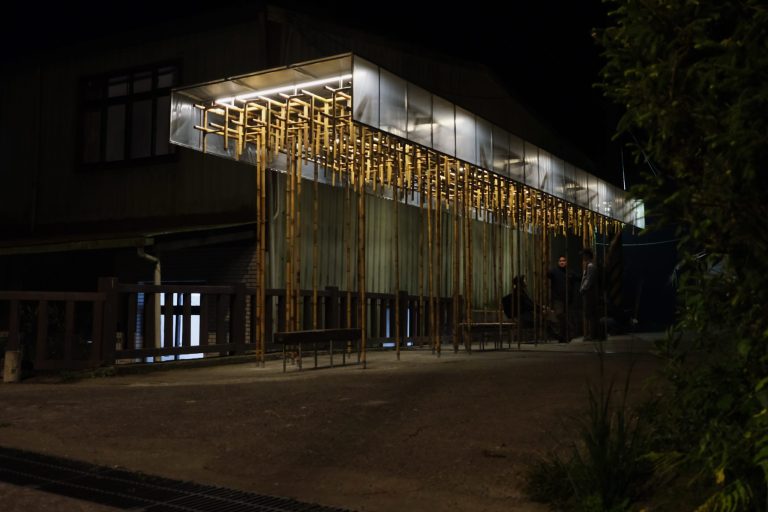
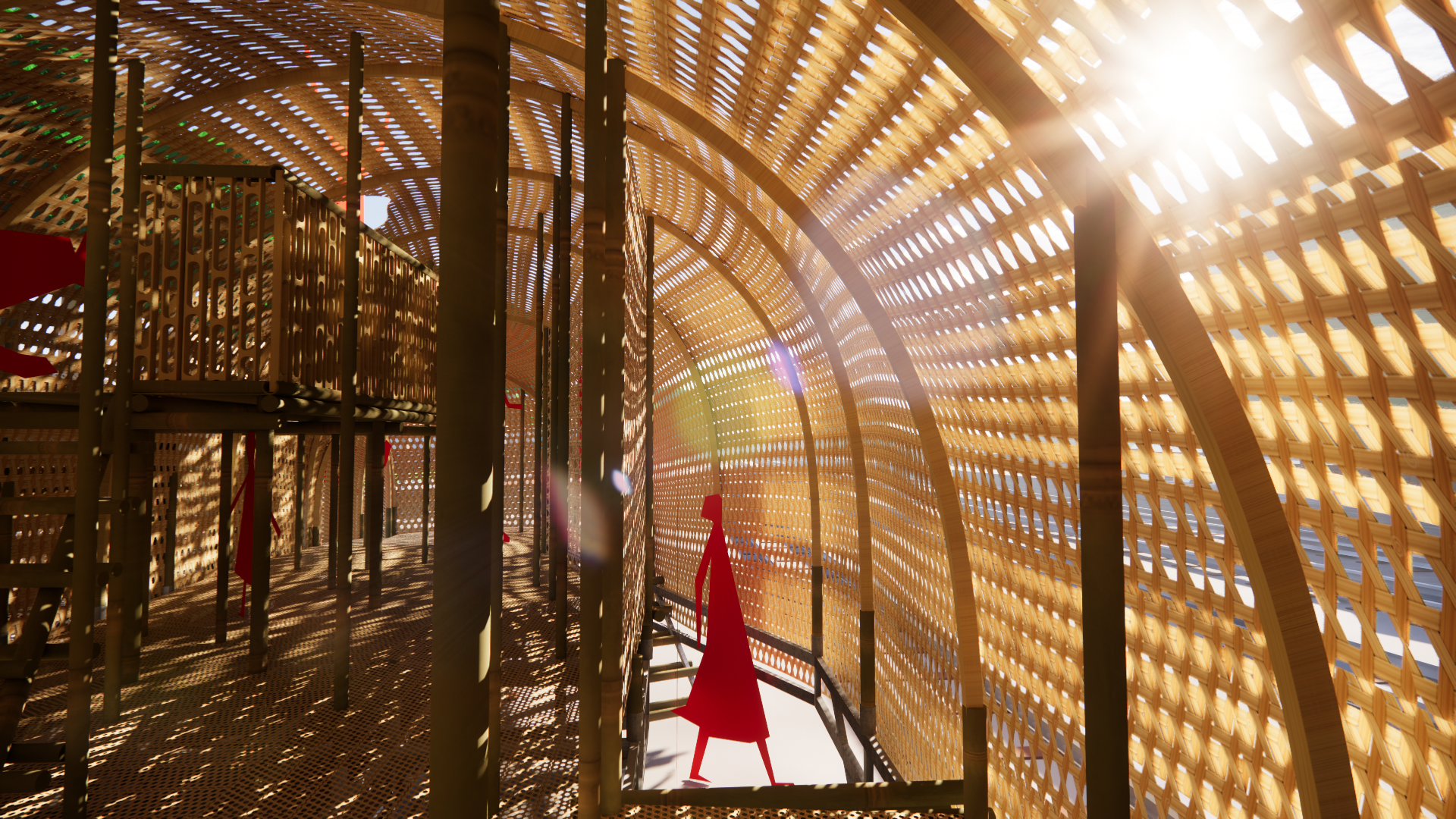
The work aims to use bamboo weaving to construct the space, but unfortunately the flatcar is a linear space, and making many variations would exceed the limits significantly. If we stick to the original plan, the flatcar will be moving between Zhuchi and Chiayi, and movement would be quite restricted. Basically, the form of the work uses bamboo weaving to enclose the space, and the internal structure is very simple. If the weaving strength of the bamboo is sufficient, it can also be presented entirely through weaving; it has that potential. (Gan Ming-Yuan)
Visually, it is heavier and more complex. We can rethink what we are doing now and what we currently have, trying to simplify every decision as much as possible. Finally, look back at the overall aesthetic and weigh it to avoid excessive complexity and clutter. Of course, you can use complex techniques, but that does not necessarily mean heavy and cluttered. (Fan Cheng-Tsung)
Ming Chuan students are very ambitious, exploring conceptual levels such as mountain lines, urban and rural areas, all the way to rich structural levels with many components, detail drawings, and consideration of construction procedures, which is Ming Chuan's strength. However, realizing that the width of the carriage is limited, it seems the strategy everyone wants to adopt—using structures to break through platform limitations—is a clever idea on the one hand, but practically doesn't allow us to do so. (Hsu Pei-Hsien)