#: The Mountain Within the Mountain
Concept
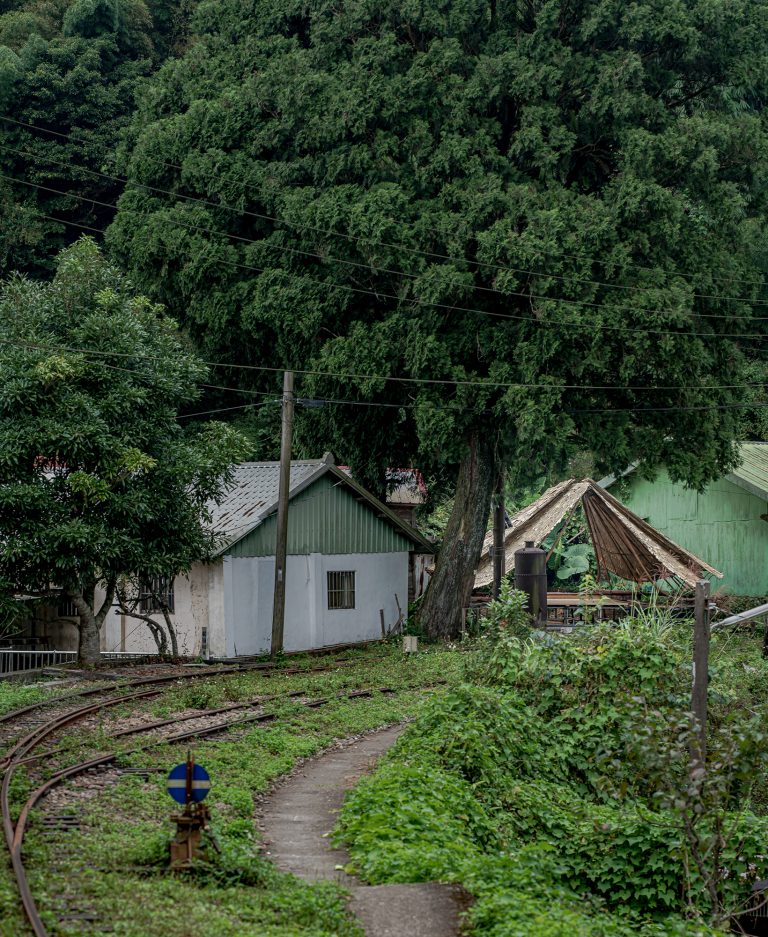
At Zhuchi Station, it was once necessary to change to another locomotive here in order to successfully make the climb.
What we want to do is recreate a cortex between ourselves and the external environment,
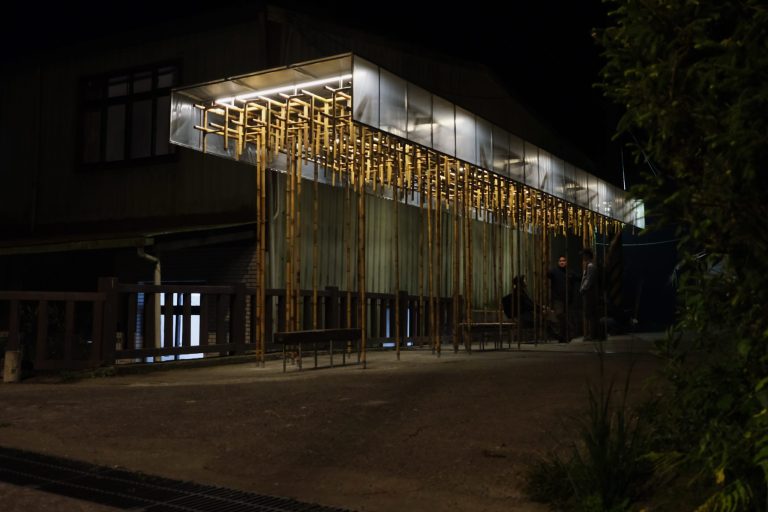
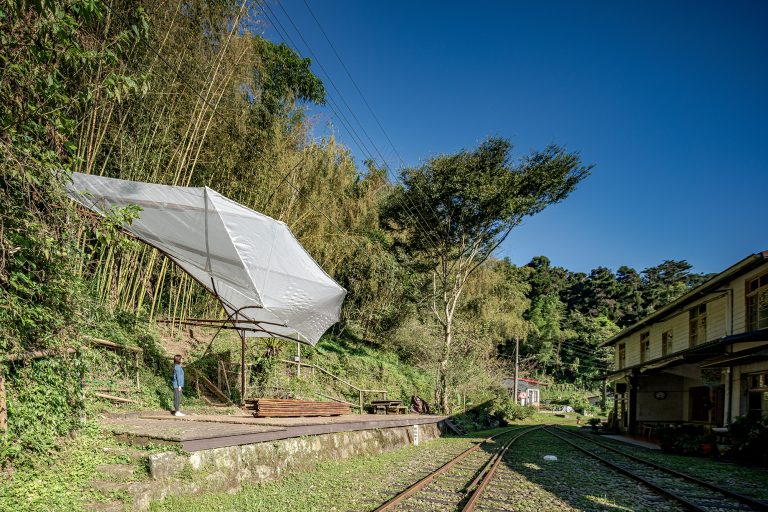
And make the railway space not merely a passageway, but a place where people can linger, quietly experiencing the external grand mountains within a human-scaled mountain.


# Review
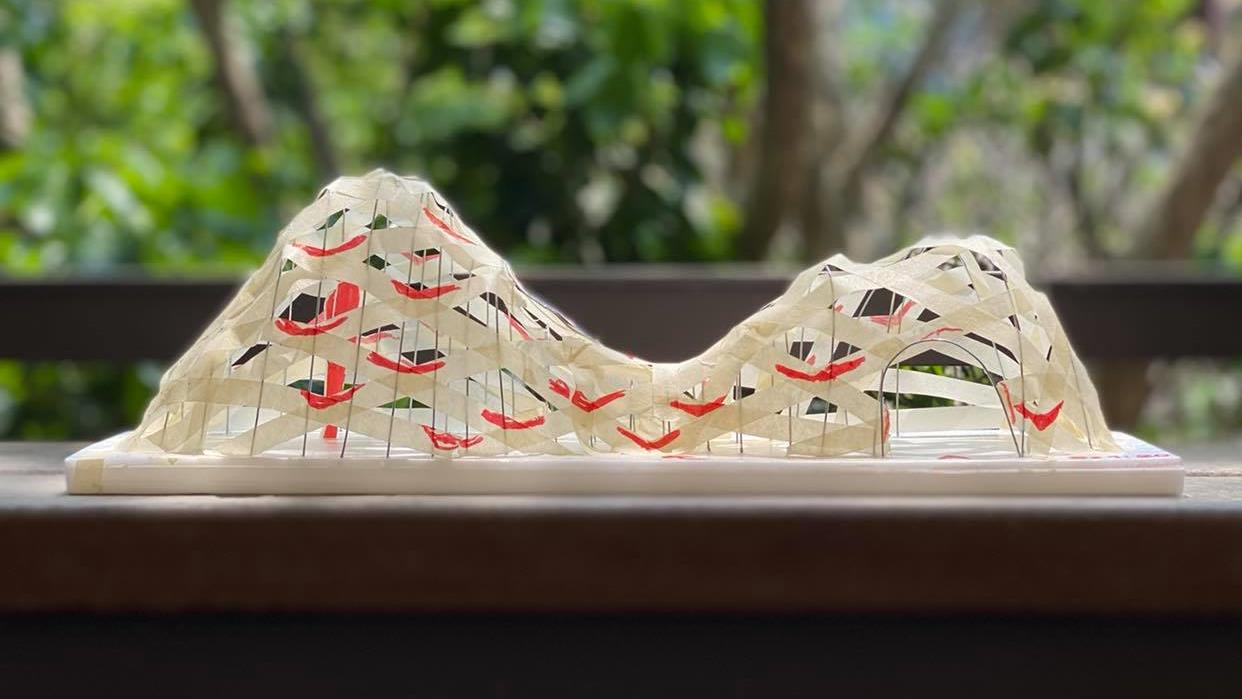
What is most astonishing about this group is this model. The work provides a translated interpretation of the mountains and space, which is truly brilliant. If the implementation can achieve almost this result, I would give this group a very high score. Especially regarding the texture of the entire wave, what kind of method is expected to be used in the bamboo weaving technique to simulate the mountain field behind it, and what degree of curvature is used to shape that geometric relationship.
However, the brilliance seems to be in this model, while the 3D stereoscopic model is not very good. The expression is worlds apart from the physical model just mentioned, and the degree of pleasure and astonishment it brings is vastly different. It is recommended to abandon the 3D approach, return to physical construction, and carefully figure out how to achieve it using your drawings, the physical model, and bamboo weaving techniques. This group has also conducted research and exploration into the construction sequence and the thinking behind the construction methods, including a possible buckle or rope-tying technique for the substructure, and this part is also commended. (Chen Kuan-Fan)
I also very much agree with Guan-Fan that the conceptual model is fascinating. However, when it comes to translating it into a 3D model, there is a gap. I feel that gap lies in the fact that the structure and the skin within the 3D model are thought of separately. Given that this work is relatively small in scale, it should be possible to integrate the structure and the skin. Through a bidirectional interweaving, it can be both a weave and a quite stable structural element. One could even use split bamboo strips instead of whole bamboo. By weaving thicker Moso bamboo strips a bit more densely—and they do not necessarily have to be interwoven over-and-under, simply stacking them up and down could work—there is an opportunity to combine its structural composition with the skin, allowing that effect of density variation in the weaving to emerge. I hope you can return to the spirit of the conceptual model; this will be quite an appealing scheme. (Gan Ming-Yuan)
Some parts of the work could be more simplified. For example, if you want to present a certain kind of wave, you could handle the details of each wave, or even how the bamboo weaving is applied to the framework. Because there are too many elements, you can think about what overall impression you ultimately want to convey to the viewer. You need to determine that single focal point, and every subsequent decision regarding additions and connections should be evaluated: does it bring you closer to your initial core decision, or does it push you further away? In the process of making something, there are actually a massive number of choices. If every choice can serve as a reminder of your main purpose and the vibe you want to present—asking whether it brings you closer or moves you further away—then during the process, you can stay confidently on that track. (Fan Cheng-Tsung)