# Bamboo Retreat Tea House
Concept
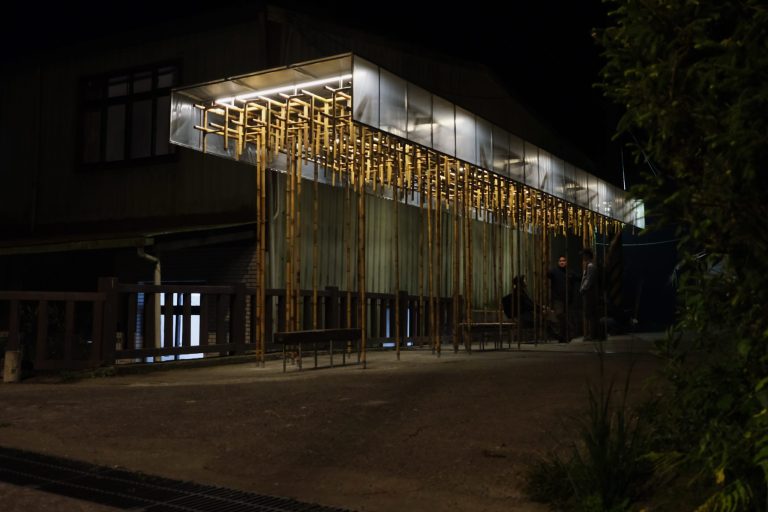
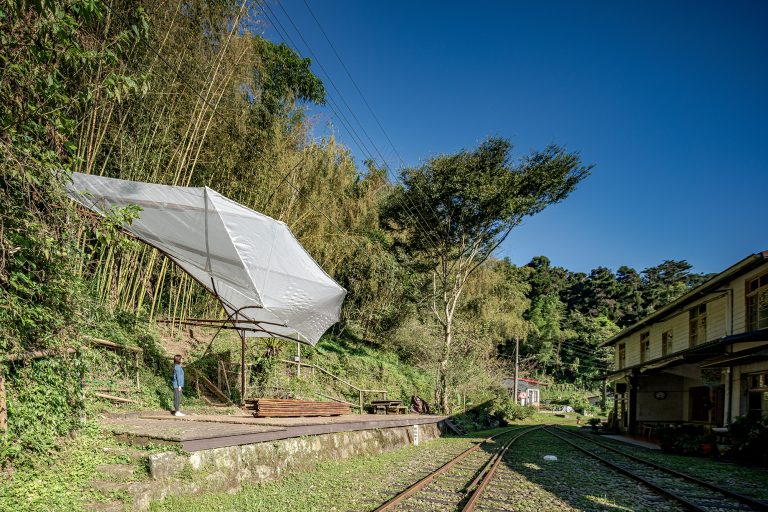
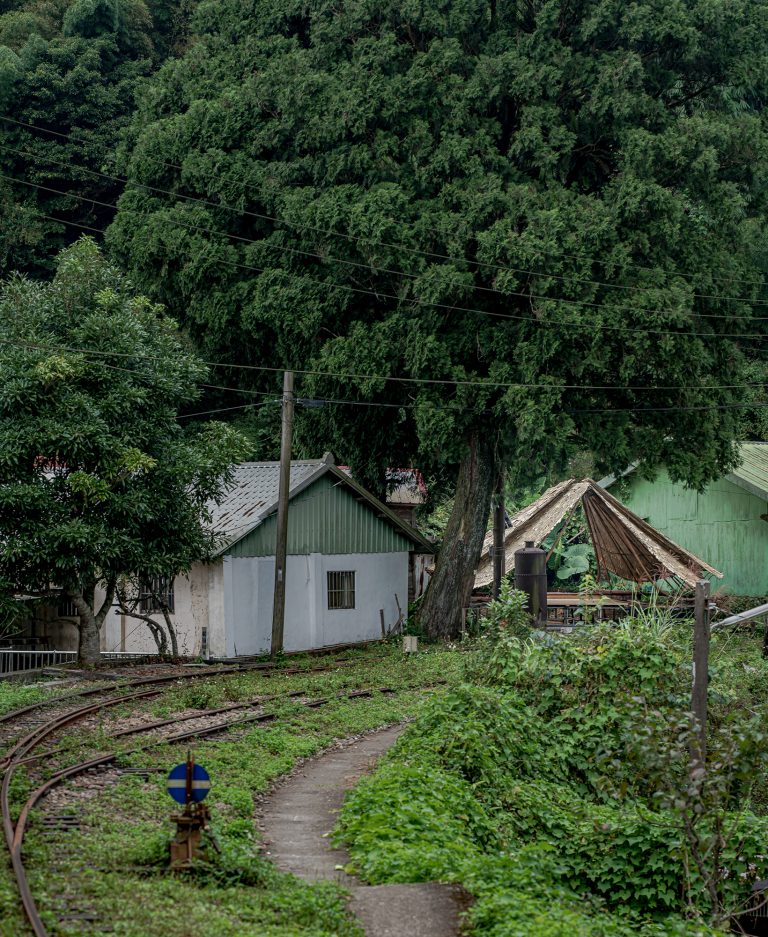
The base is located along the Alishan railway line, surrounded by dynamic facilities such as a water-friendly park and a skywalk, offering visitors a resting place with a relatively “quiet" and slow-paced atmosphere.Enjoy sitting comfortably on the floor to taste tea and snacks, experience the charm of bamboo as a building material, and give yourself a moment of relaxation. Using locally sourced ingredients and specializing in local specialties to vitalize the characteristics of stations along the route, it builds an eco-friendly and practical space, creating a mobile dining car where visitors can experience the charm of nature firsthand.
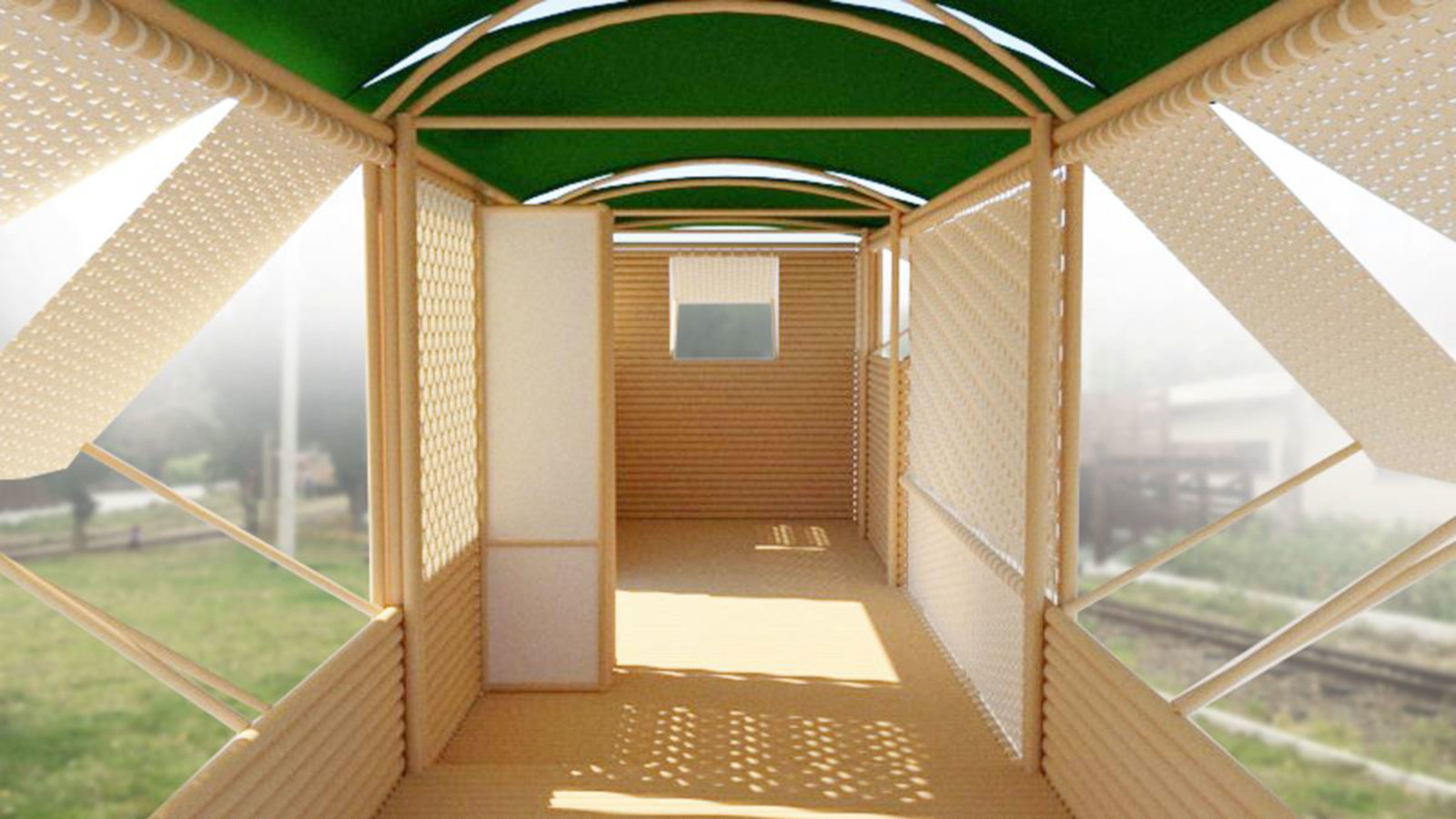
The narrow, elongated space resembles a train car, upholding Zhuqi's hospitality with a sincere commitment to service. Both in motion and when stationary, the windows can expand outward to increase spatial transparency. Different bamboo weaving techniques are used on the walls and windows to add a playful touch and reduce the feeling of oppression, while large windows connect the indoor space to the outdoor landscape, bringing people closer to nature like a series of vivid hanging paintings. The roof uses waterproof canvas, while staggered awnings are utilized to increase ventilation and natural light.



# Review
The overall impression of the work is relatively traditional and common, resembling a standard bamboo house construction. Therefore, questions may arise regarding its ambition, challenge, and breakthrough potential. However, starting from a simple framework to seek breakthroughs is actually a very good direction.
For example, even with a simple box, its surface texture and skin can use relatively common bamboo construction methods or vary the weaving pattern—such as creating a gradient texture that gradually shifts from one end to the other—giving the box a simplicity that is rich and engaging to appreciate.
The challenge in the subsequent development of the work is: how to seek subtle variations from simplicity? For example, the flipped windows in the work create variations in spatial openness and closure, which is an interesting part. (Hsu Pei-hsien)