|| 7組團隊 × 7個全新結構方案 = 新的接合設計 ||
The 2022 Gout-Chu Forestry Railway Emerging Architects Exhibition features innovative structural solutions by seven architectural design teams, creating resting spaces using "bamboo" as the primary structure across five stations along the Alishan Forest Railway in Chiayi. By rethinking "joints" to develop new structural models from the smallest details of construction, the exhibition explores and challenges the methods and limits of bamboo material applications. We sincerely invite you to ride the forest railway small train with us and experience the potential of domestic bamboo entering modern life.
Event Information
In-Person Exhibition Area
Starting from October 30, 2022
Chiayi Railway Garage Park (near Beimen Station)
Zhuxi Station
Liyuanliao Station
Shuishaliao Station
Crossroads Station
Bamboo Structure Model Exhibition
2022.10.30-2022.12.09
Alishan Forestry Village (Chiayi City) / Hand-weaving Factory
Wednesday to Sunday, 09:00~17:00
☛Complete Collection of Bamboo Structure Work Information
Gathering rich information such as curation concepts, structures, joints, blueprints, and construction photos
☛Media reports
Fully followed and covered by Green Media, with detailed reports on the creative process of the work
☛Tsubasa Kitamon—With Wooden Lab / Chen Chien-Tung
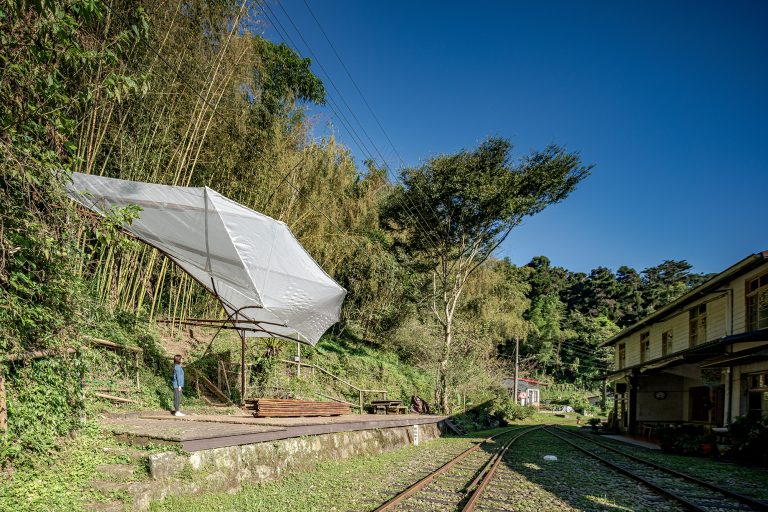
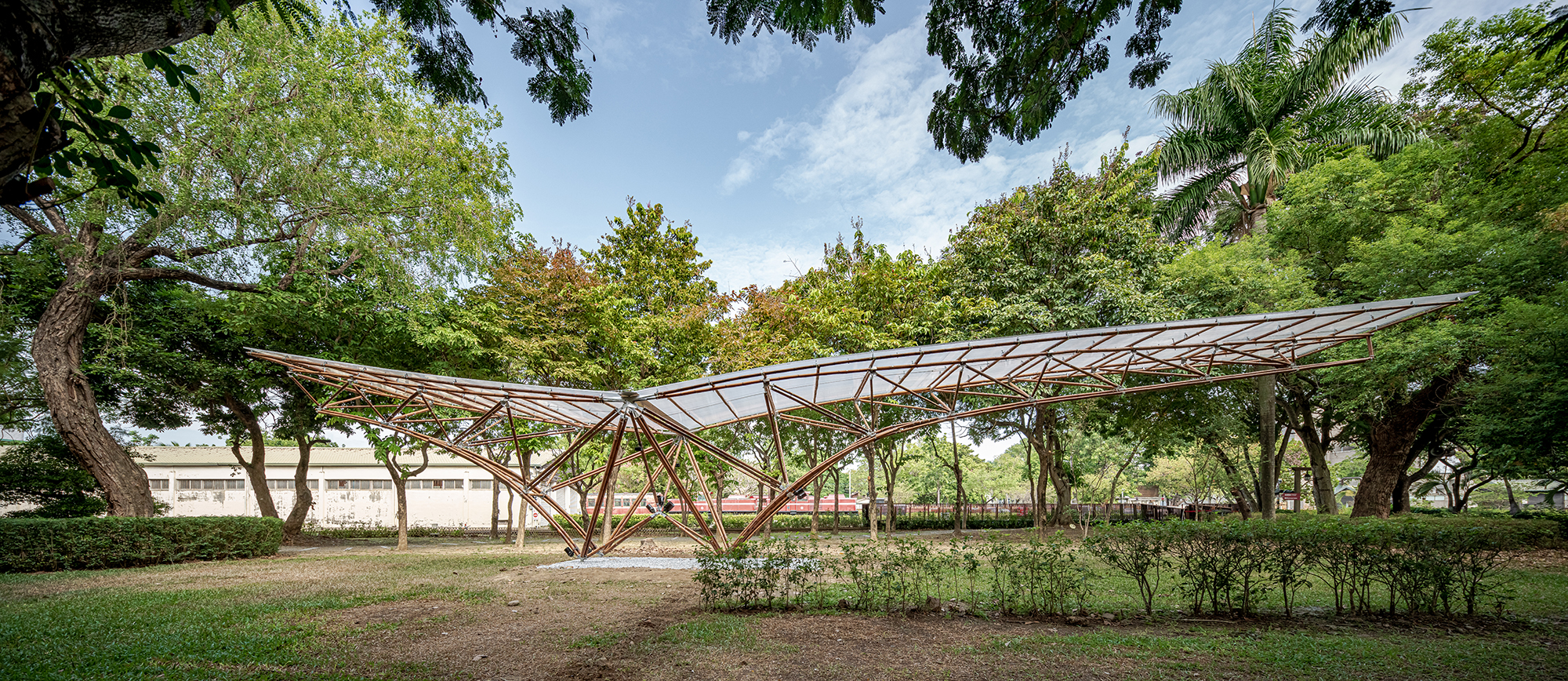
Peimen Station was originally the starting station of the Alishan Forest Railway. Once Alishan logs arrived at Peimen Station, they were sorted by wood species and transferred to either the timber storage pond or the land timber yard, serving as an important base for Chiayi City's lumber industry. Using the homophone ”wing” (翼) to evoke the imagery of a lightweight bird, a youthful and powerful sculptural structure is formed, which then integrates with the existing train carriage exhibition. Utilizing the material properties of bamboo, a large-scale cantilevered structure presents the imagery of a railway platform. The progressively rising form conveys the dynamic feeling of departure, guiding viewers toward Alishan for a bamboo architecture journey. The detailed design incorporates train parts from the garage park as imagery to develop special joints suitable for bamboo structures.



☛Chasing Clouds—ROSO Robot Building Laboratory / Wang Shih-Yuan + Sheng Yu-Ting + Lu Yen-Chen
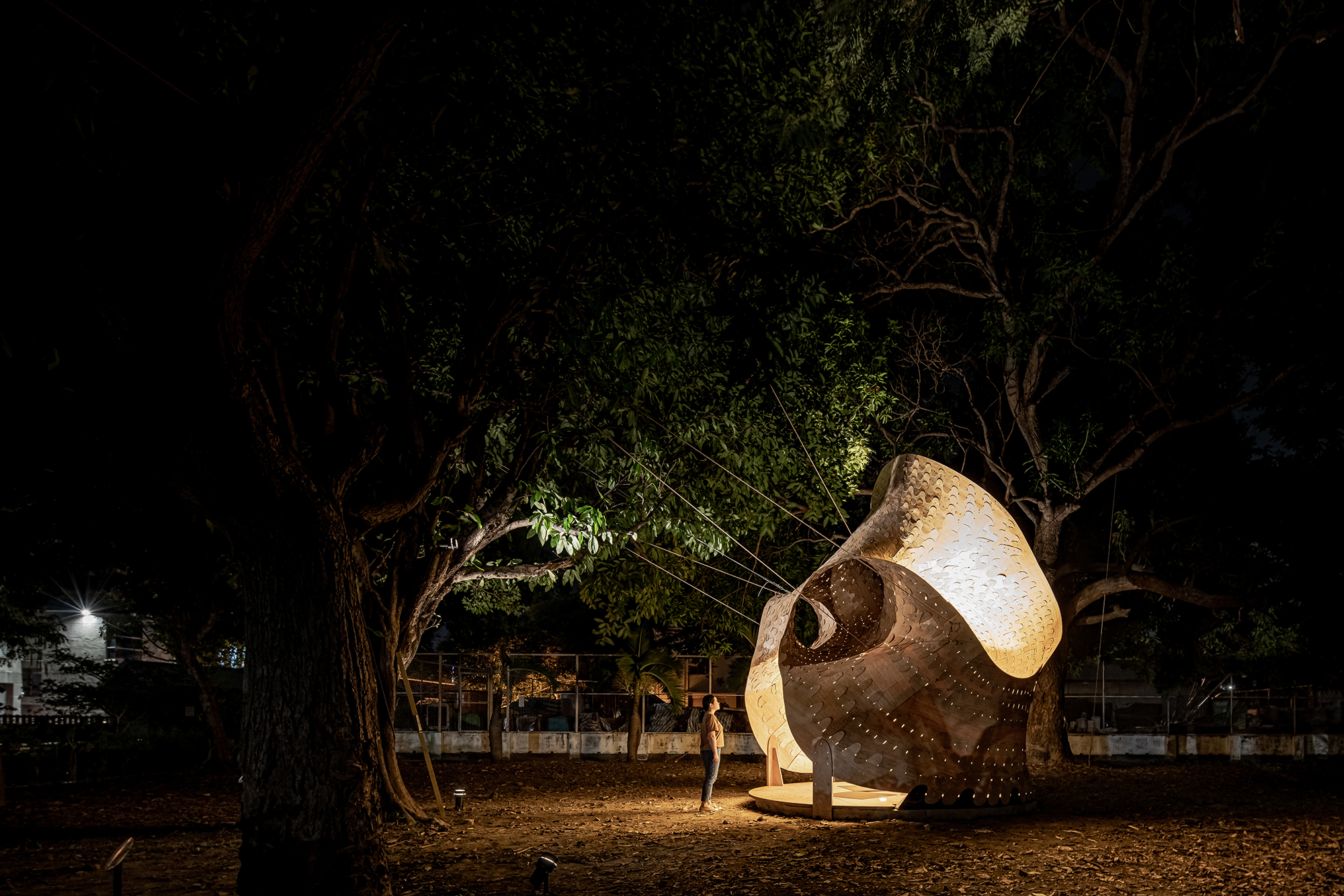
The work is based on the winding forestry railway of Alishan, featuring layers of trees and foliage. Sunlight filters through the swaying gaps onto the railway tracks, and as people ride the small train through the dim light, they quietly feel the gentle breeze. In the past, bamboo structures mostly relied on rod-like materials in truss systems. This time, we wanted to explore the material properties of bamboo fibers across different structural systems, forms, and materials. By combining art, computational design, and digital manufacturing, we aim to showcase a previously unseen aspect of bamboo construction.



☛Bamboo Realm—Prototype Structure / Chang Chia-wei
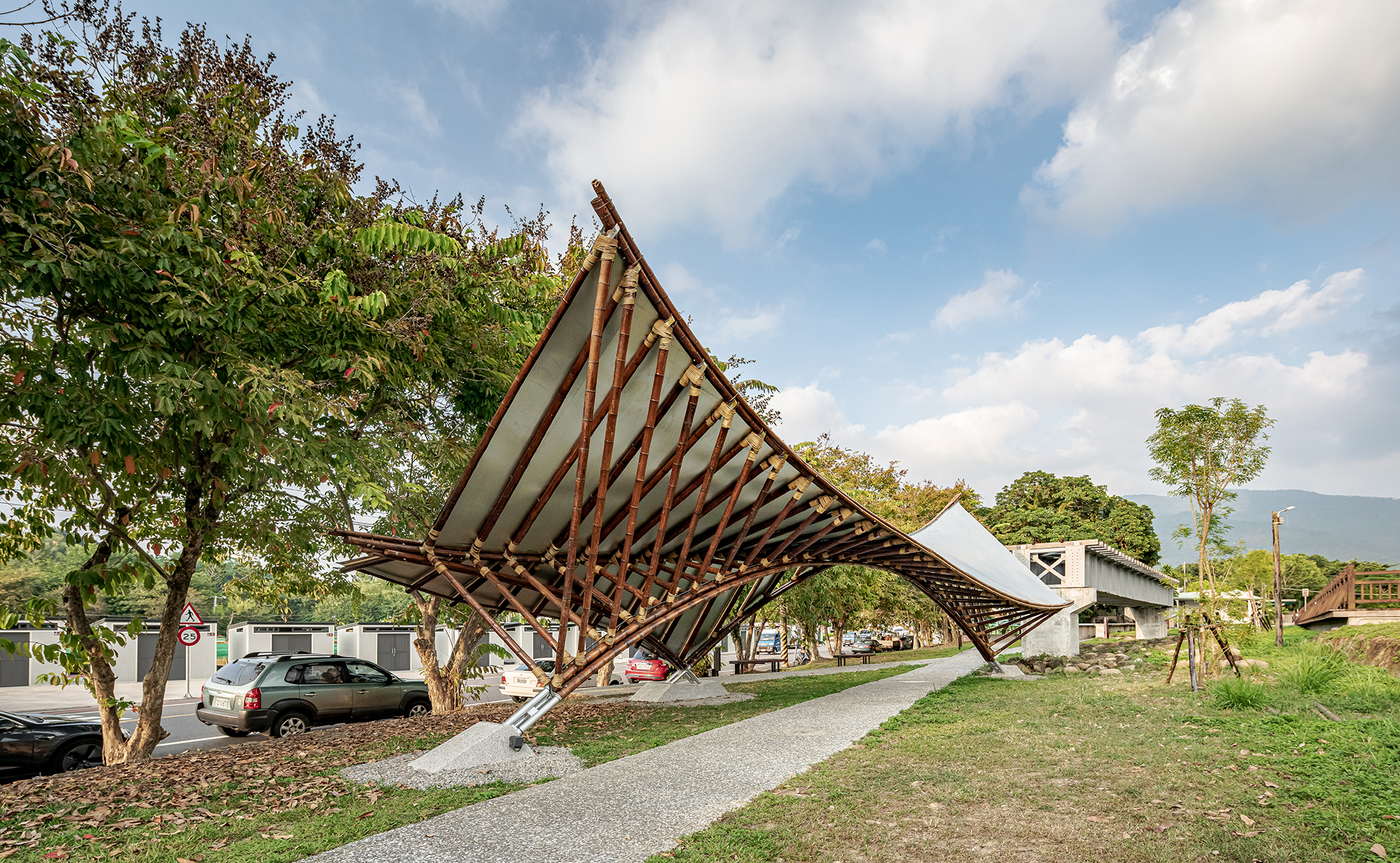
Creases become marks; following the marks creates a path.
Zhi, representing the symbol of the Alishan Forest Railway, shuttling through the forests of Alishan. Zhi, representing the shape symbol of bamboo and bamboo craftsmanship, possessing the intrinsic beauty of bamboo's form. Zhi is also the spatial symbol of the railway itself, illustrating the highly distinctive zigzag railway and switchback station routes of Alishan Forest Railway. Gradually, I realized that ”Zhi” evolved from an initial symbolic sign into having spatial significance. And these ”Zhi” characters originally stemmed from the spatial creases within the mountains and forests, along which people slowly created pathways.


☛Firefly River Platform—Hwa-Chih United Design Production / Chen Hwa-Chih + Chen Yun-Ching
Passing through the long tunnel, you arrive at Liyuanliao Station.
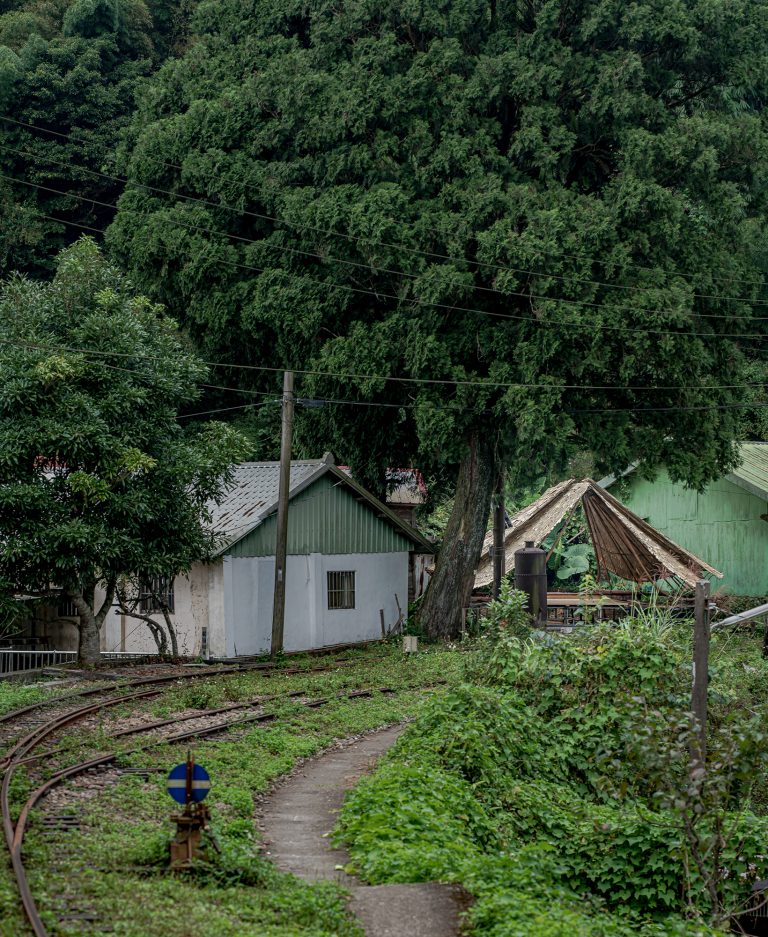
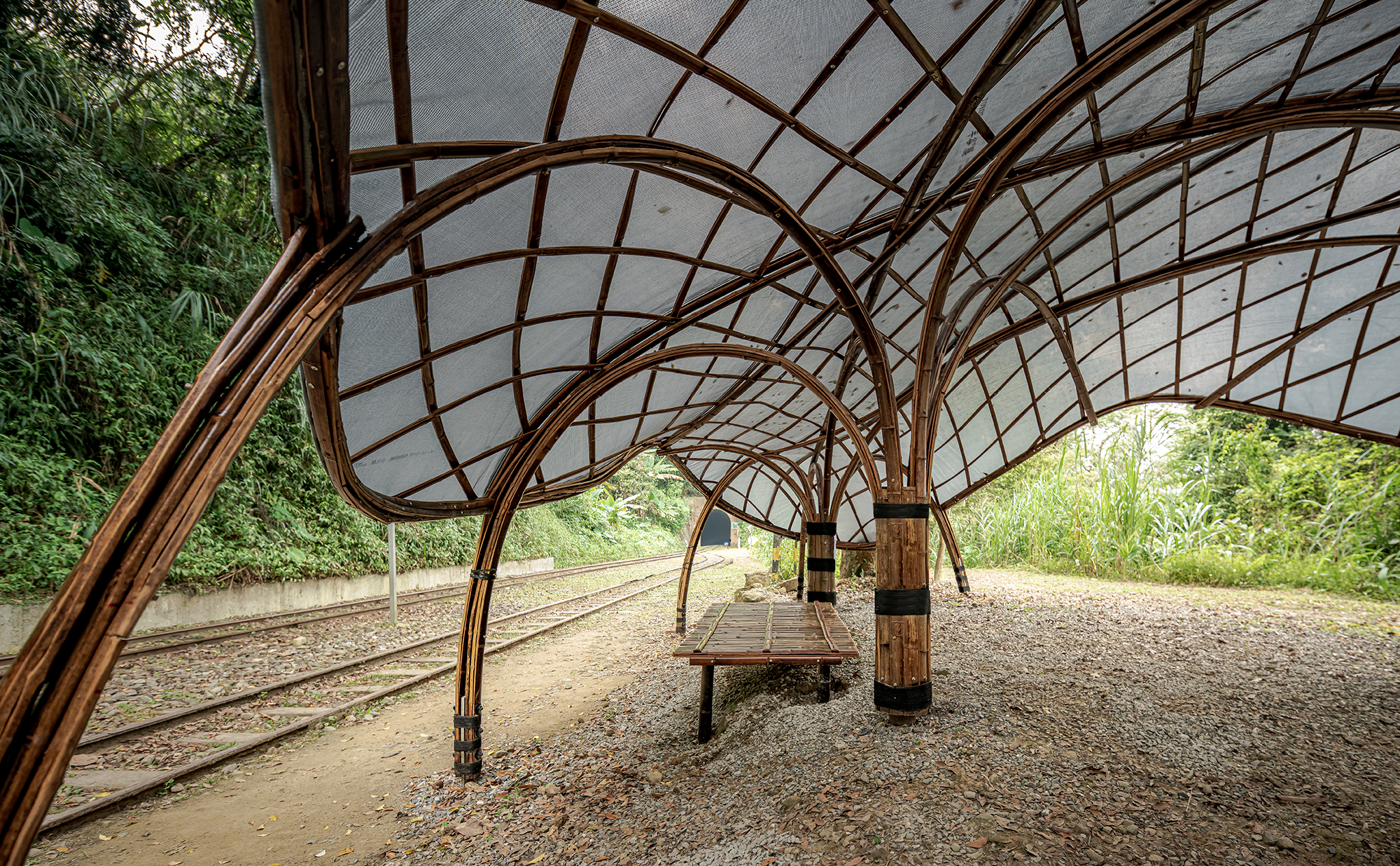
The unmanned train station famous for fireflies is also known as the Firefly River Railway. Every April and May, this secluded setting always transforms into a dreamlike scene. Therefore, beside the railway that has lost its function as a passenger platform, we sought to construct a waiting space functioning as a "Moon Platform" to await the arrival of night. Much like the butterbur leaf (fuki) on Totoro's head during the rainy scene in the animated film *My Neighbor Totoro*, the edges of its leaves, or the taro leaves found everywhere in the mountains and forests, share the same flexible and lightweight characteristics as bamboo. Utilizing continuous, undulating arches to construct an ups-and-down form that lightly touches the open space between the station and the large camphor tree, it creates an intimate spatial experience for those lingering amidst the gentle breeze, the sound of falling rain, soft light and shadows, or while waiting for the fireflies to appear.


☛The Gateless Gate. Enter the mountain gate.AtelierNeoE Easy New Design + Group B / Po-Jen Cheng
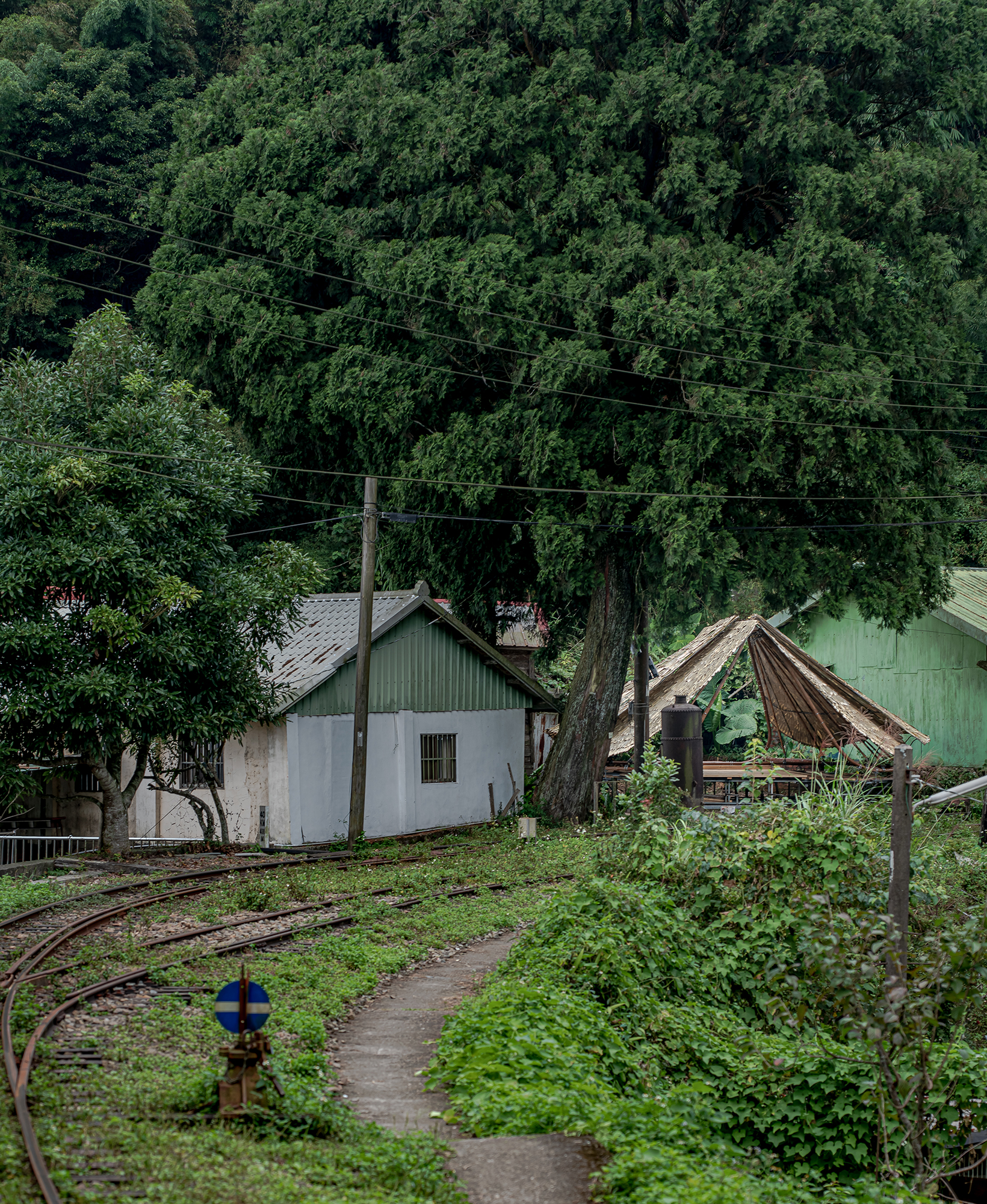
As a domain feeling like a barrier opening up between the artificial and natural worlds, the Alishan Forest Railway is a process of slowly approaching nature. As an industrial settlement, Shuishe寮 Station is one of the earlier populated areas along the railway.
The shared feeling evoked by the Alishan Forest Railway serves as a gateway to nature. "Nothing" acts as a verb; by removing the secular door, one attains the door of nature. By removing the functional door (entrance imagery), one attains the door of thought (spirit), reminding the experiencer that upon the forest railway, having entered the mountain gate, nature is the true Buddha, and it is only by stepping across that one can truly witness nature.


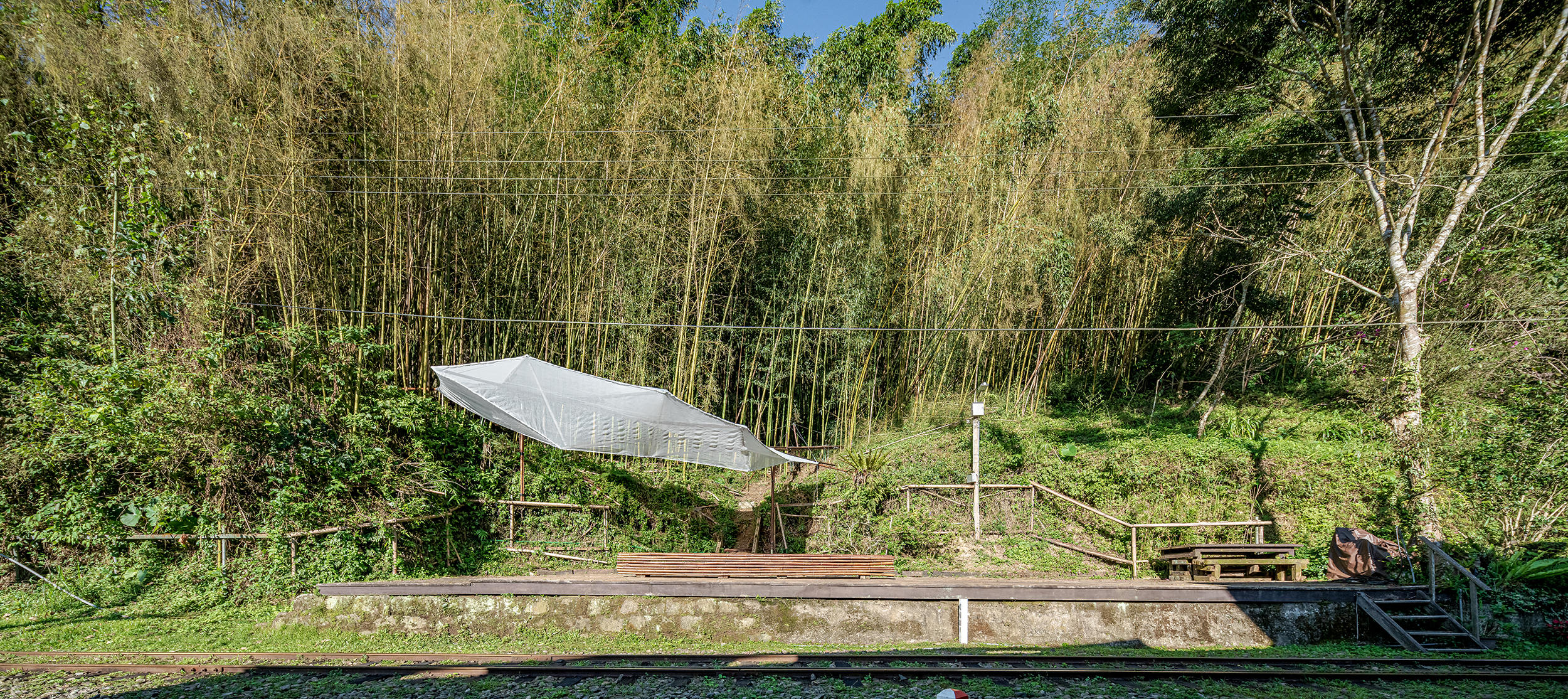
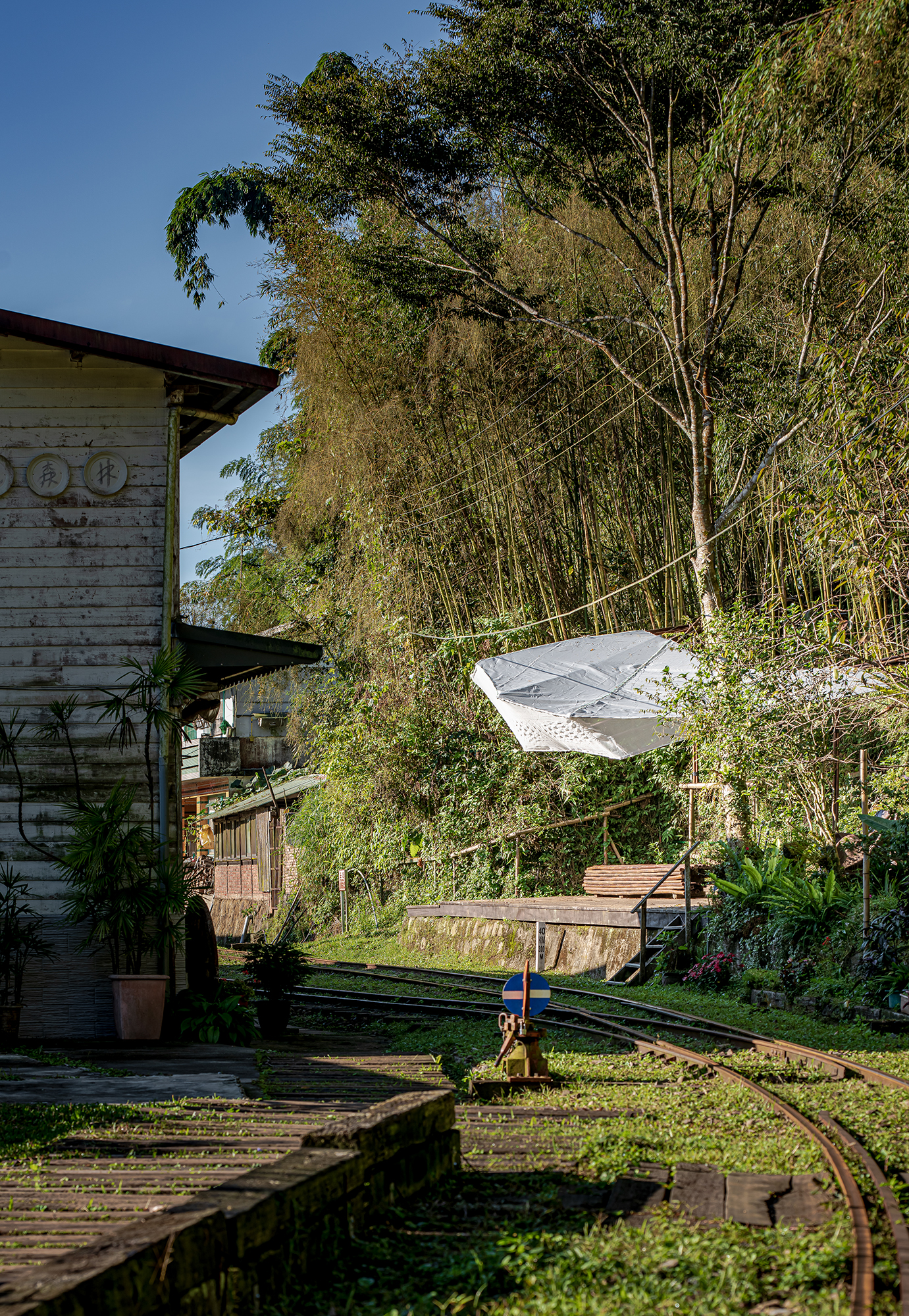
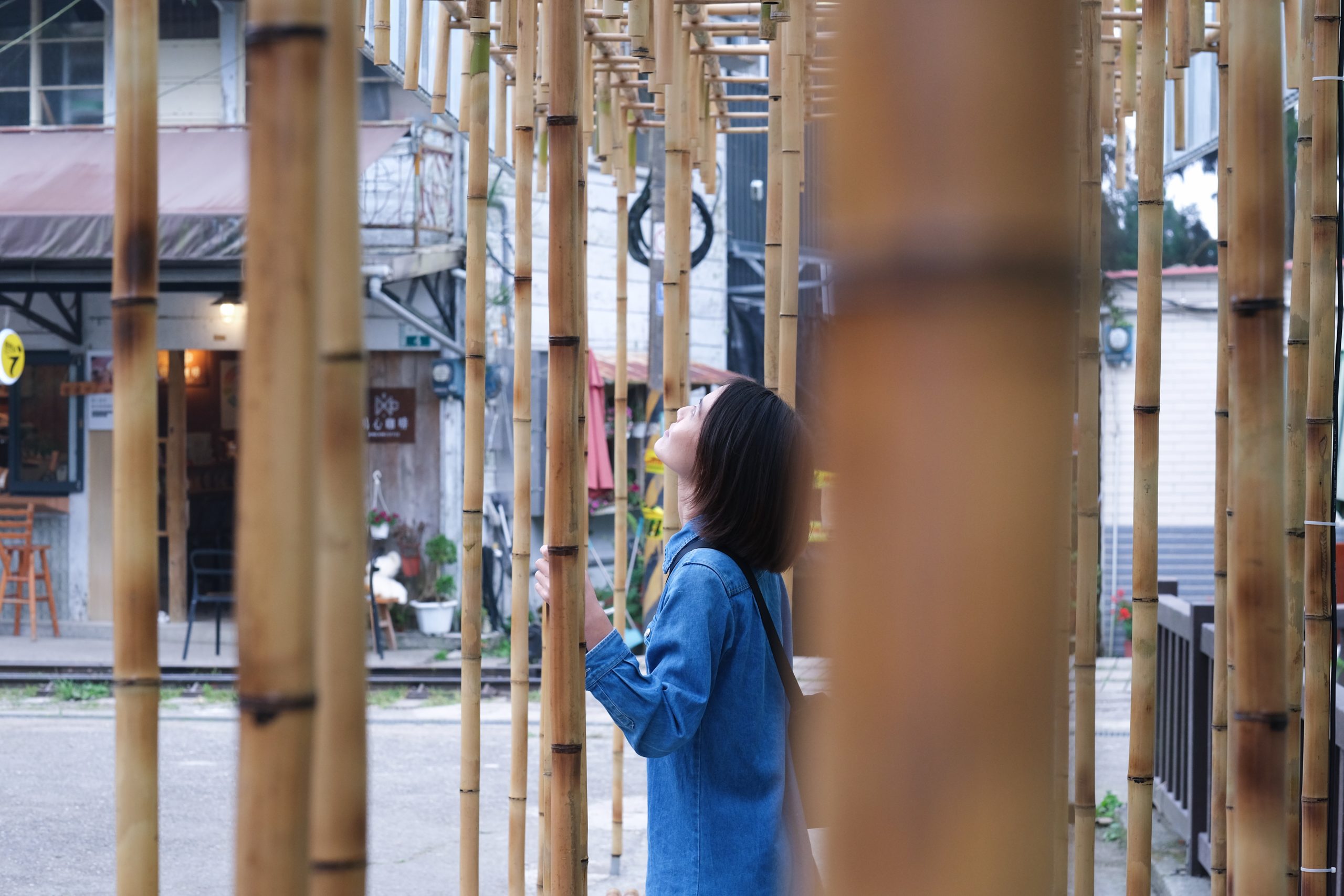
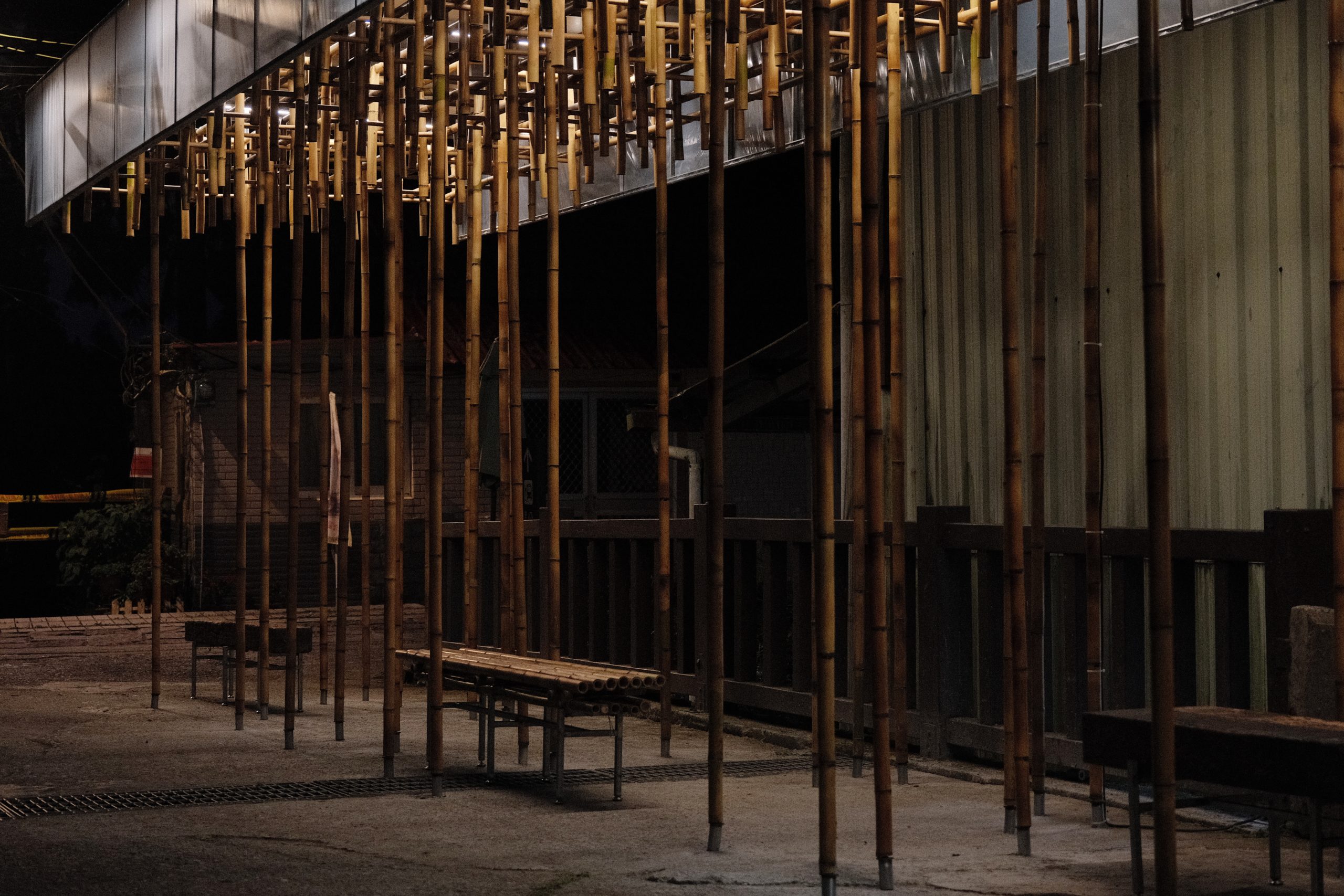
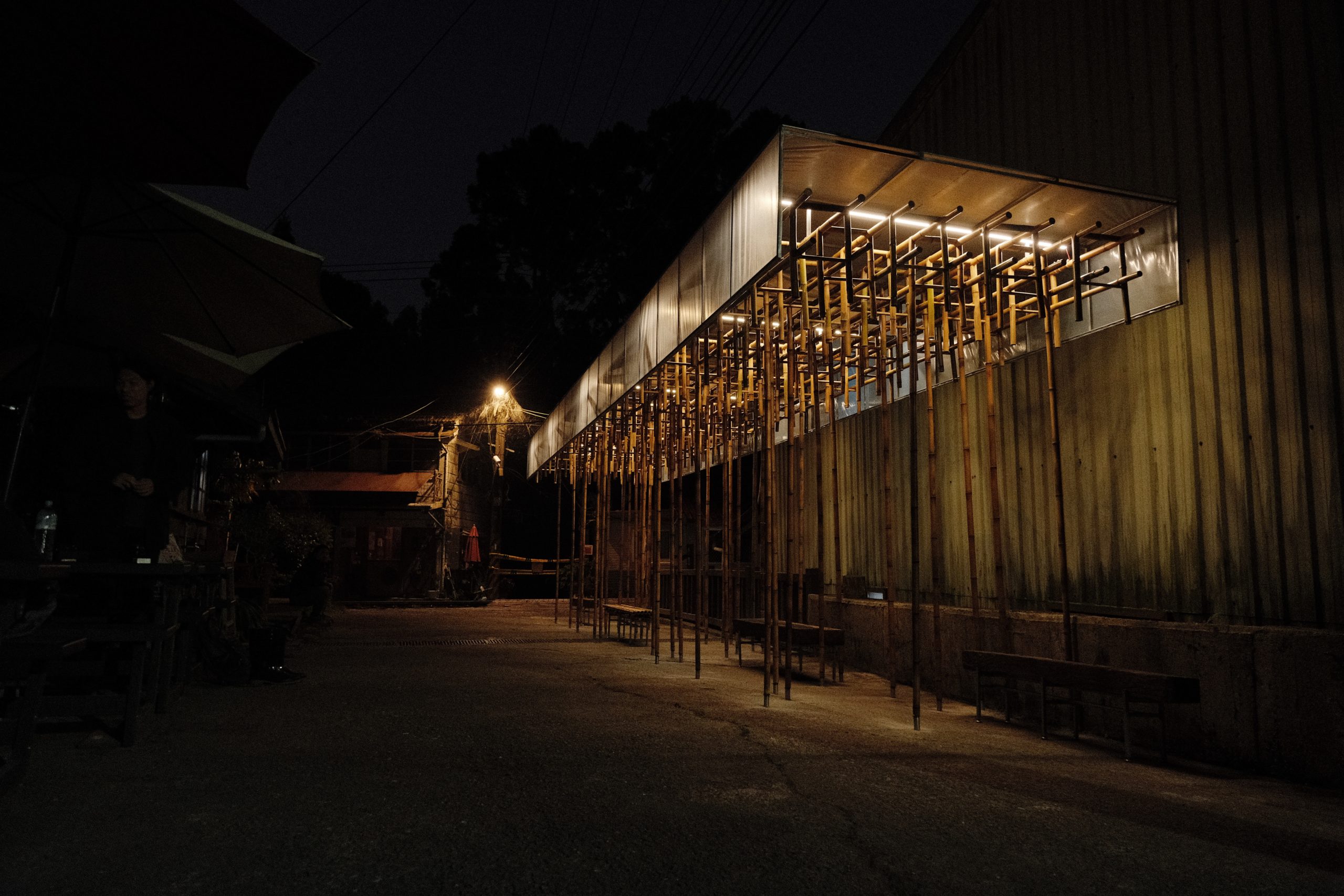
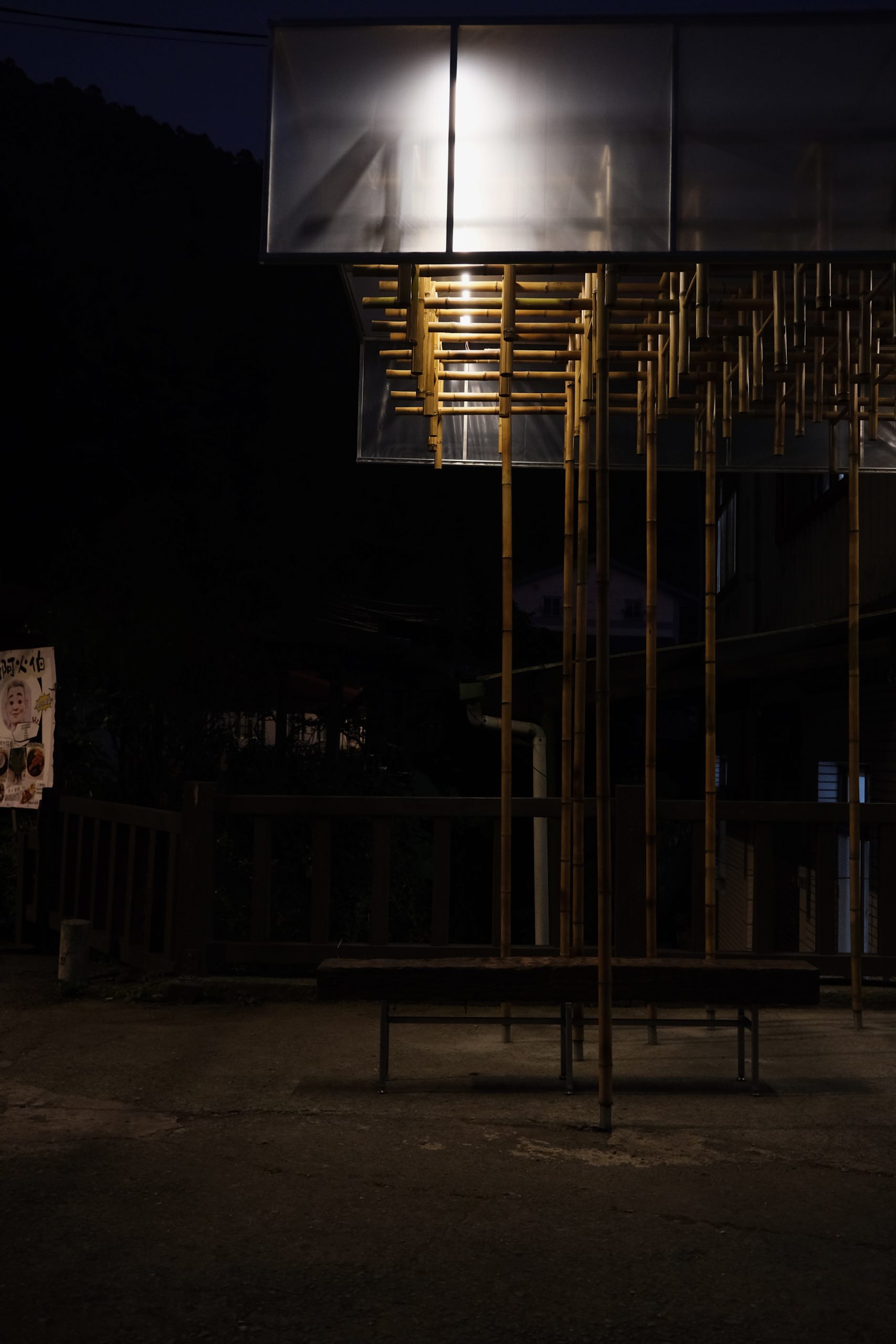
☛Lin-Tie-BianjieTing Chu Architects + Wako Design / Cho-Jen Huang + Chieh-Er Huang
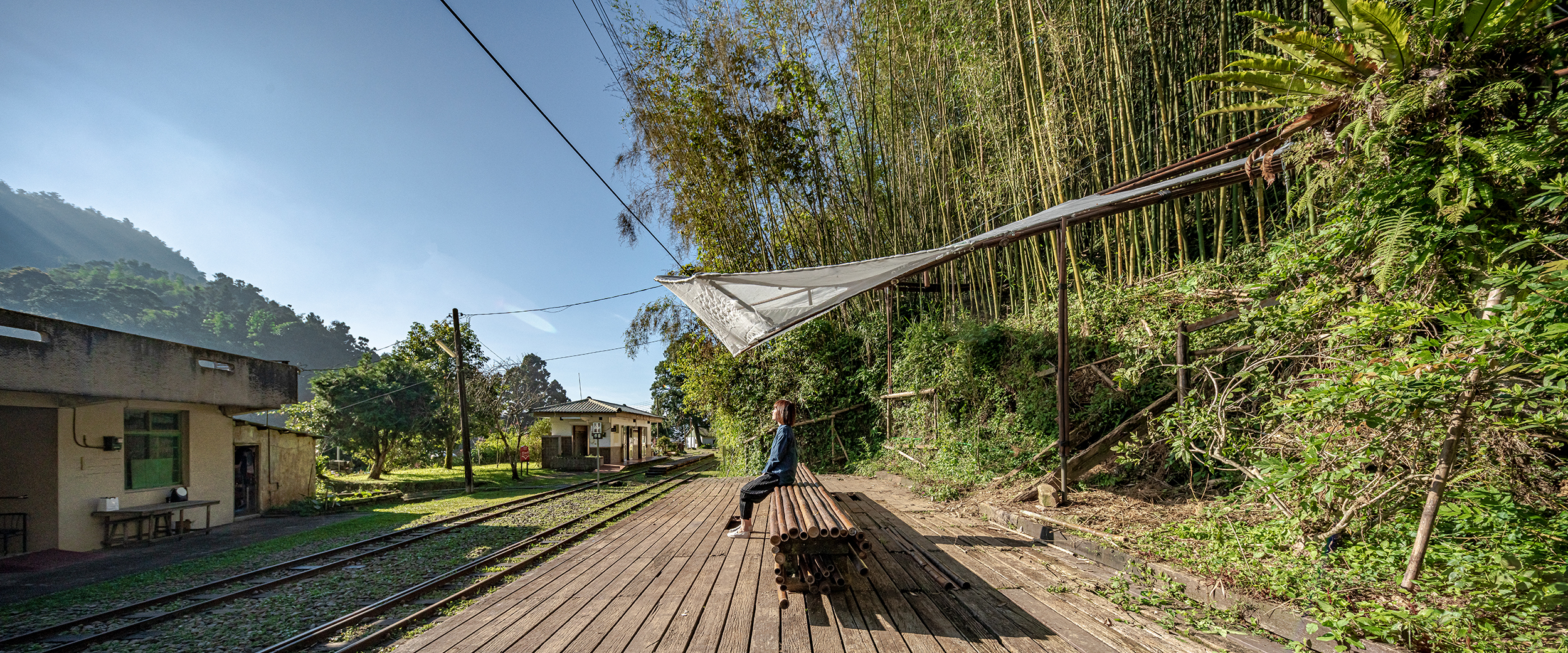
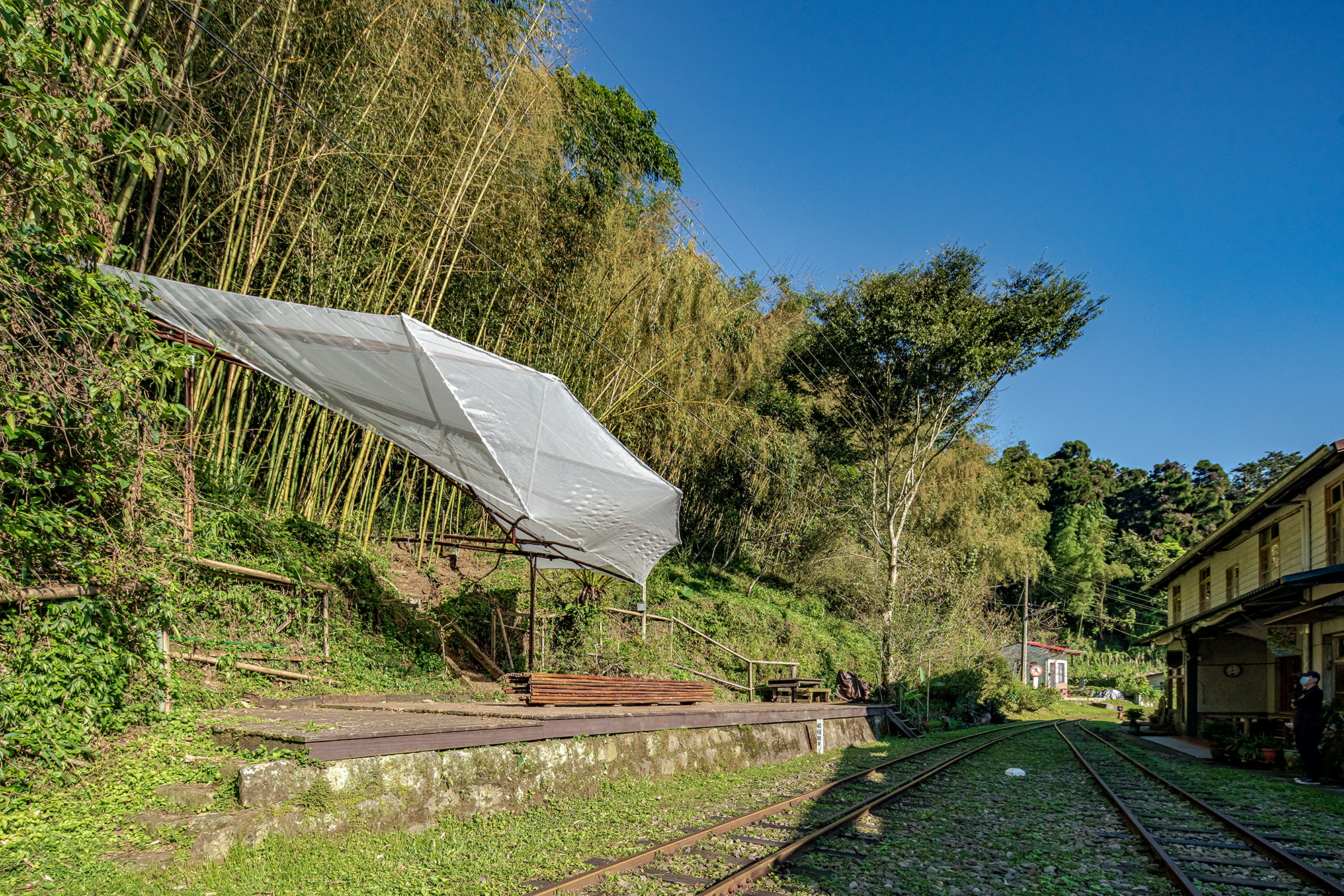
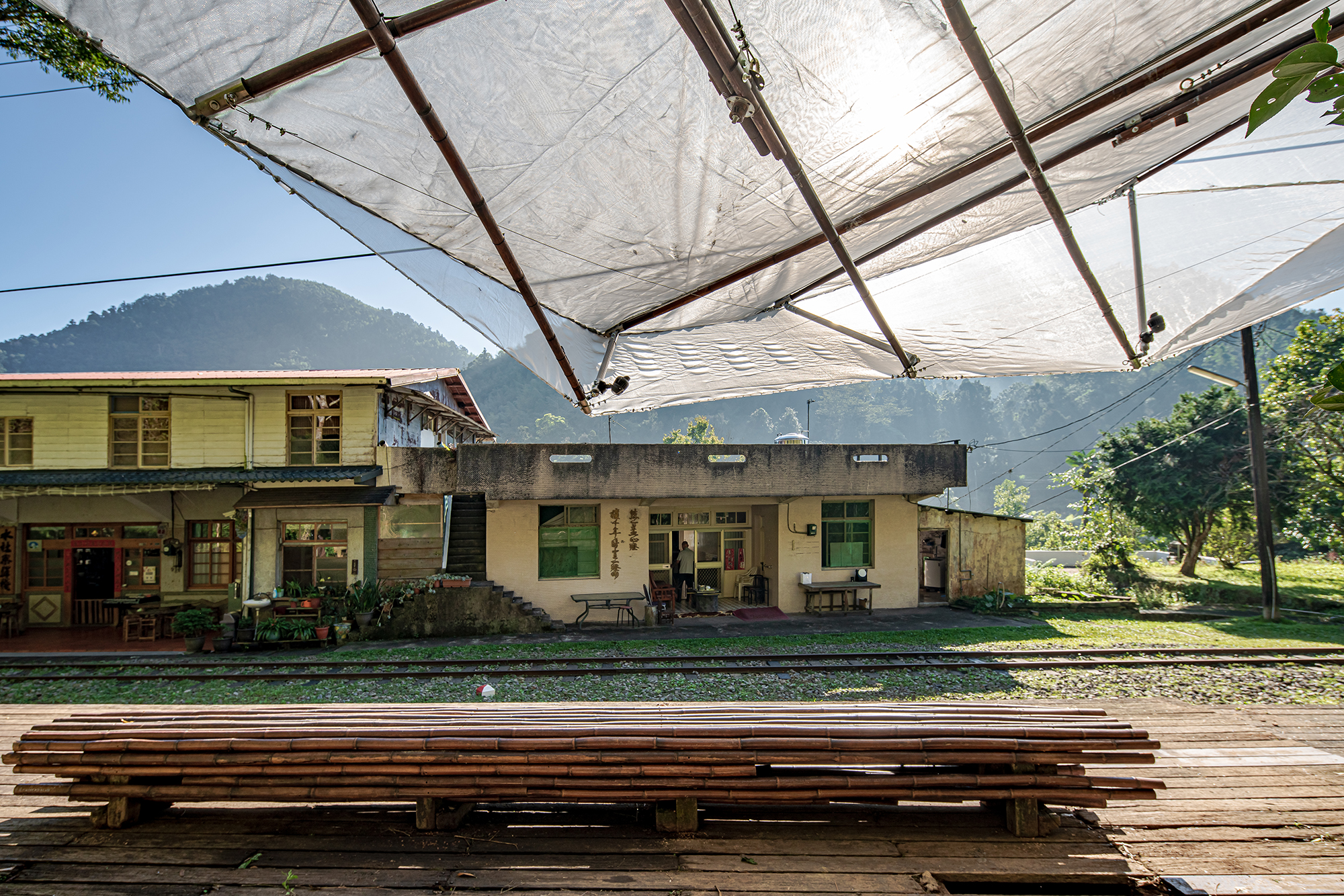
The base is located at Shuisheliao Station, where the railway cuts through the mountains and forests, resembling a boundary of coexistence between humans and nature.
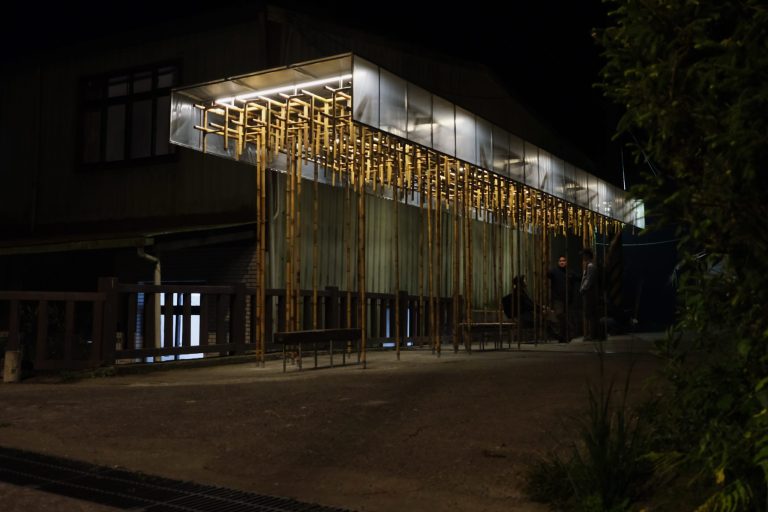
By observing the site, the railway and the native bamboo forest coexist within this space, representing artificial and natural linear elements respectively. Through the "kagome weave" (hexagonal plaiting) commonly found in bamboo craftsmanship, a structural order is established. These two linear elements are woven using bamboo into a structure cantilevered over the hillside, creating a blurred boundary and space that suggest the intersection of the artificial and the natural. Guided by this structure, people are led to reobserve and draw closer to the bamboo forest landscape of the hillside.
☛CROSS X—Benshi Creative / Hsin-Yeh Hsieh + Yu-Ren Chen + Yi-Ting Tsai
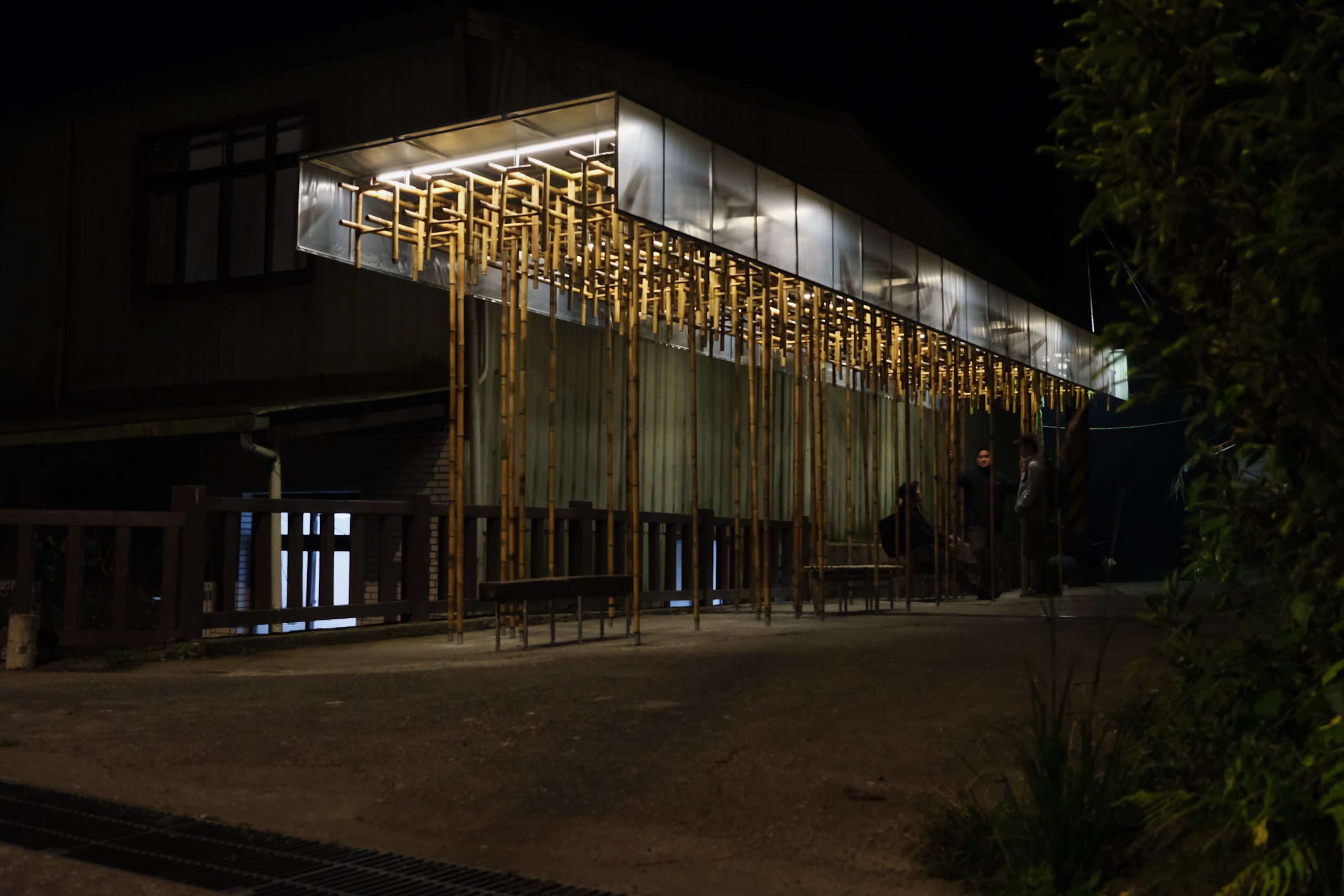
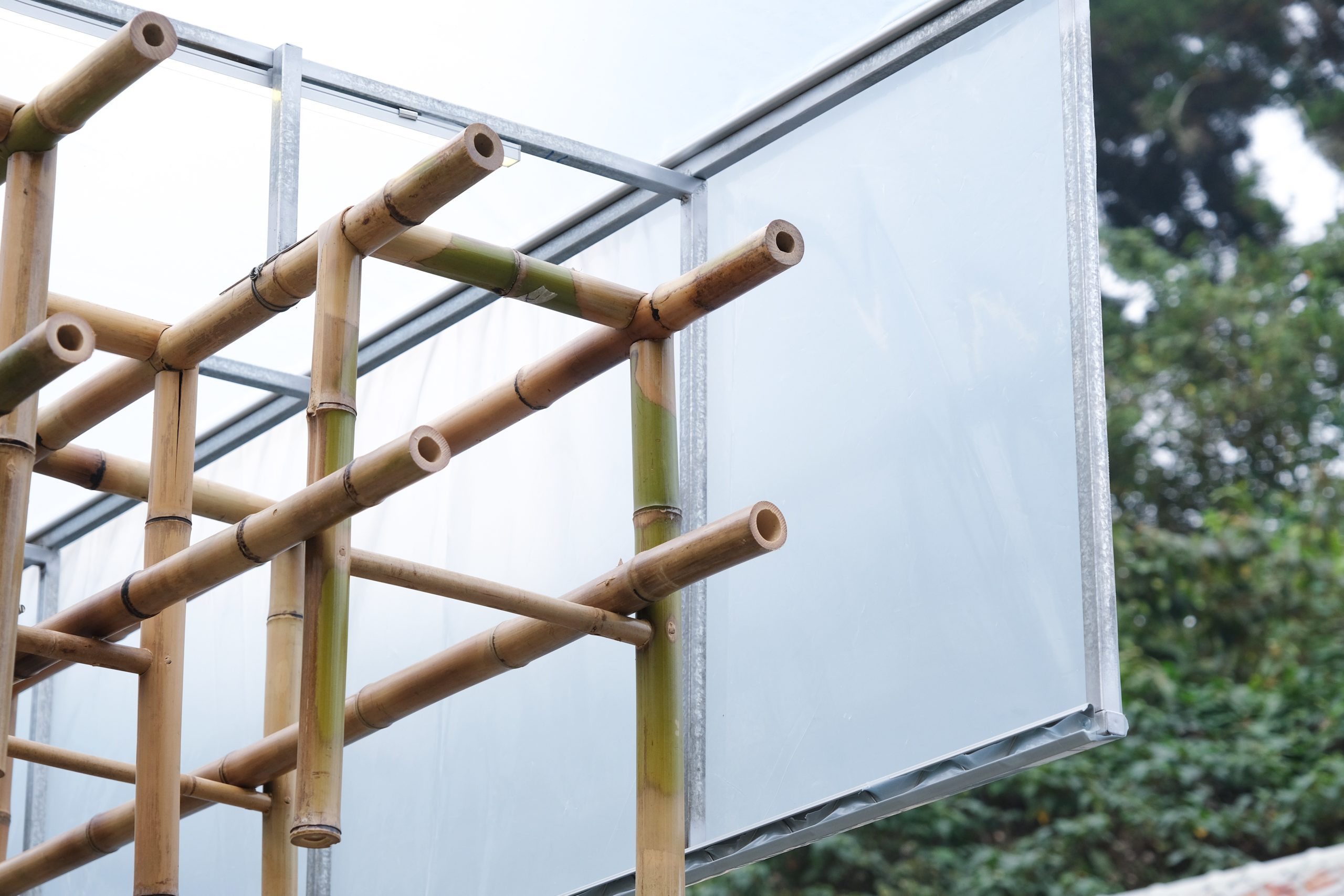
As the name suggests, the crossroads have always been a meeting point for travelers.
Since ancient times, it has been an intersection of tribal ancient trails and a midway stop on the way to Alishan. Today, it is essentially the terminal station of the Alishan Forest Railway and a transfer point to Alishan. Local residents live along the railway, and when the small train arrives, though brief, it is the liveliest moment in Shizilu. The hope is to create a place at this intersection where tourists and residents gather, offering a spot for visitors to rest when they want to take a break, as well as a pavilion for residents to chat and socialize in their leisure time.
| Sponsored by:Forestry Bureau, Council of Agriculture, Executive Yuan
| Organizer: Taiwan Bamboo Association (incorporated association)
| Co-organizers:Alishan Forest Railway and Cultural Heritage Management Office
| Curated by:Prototype Structural Engineering Consultants, Ltd.
Photo credit: Yuan-Jian Photography / Chu Yi-Wen