2021 Bamboo Forest Railway New Talent Exhibition
Text – Green Media Photos – Taiwan Bamboo Society, various architect teams
The area traversed by the Alishan Forest Railway is rich in ecological resources, with various types of bamboo growing across tropical, warm-temperate, and temperate zones. Forestry once intersected the plains indigenous peoples, the Tsou, Han Chinese, and Japanese cultures, and bamboo could be found everywhere in the everyday lives of these various cultures. However, past logging bans led to a severed industrial chain and a brain drain of talent.
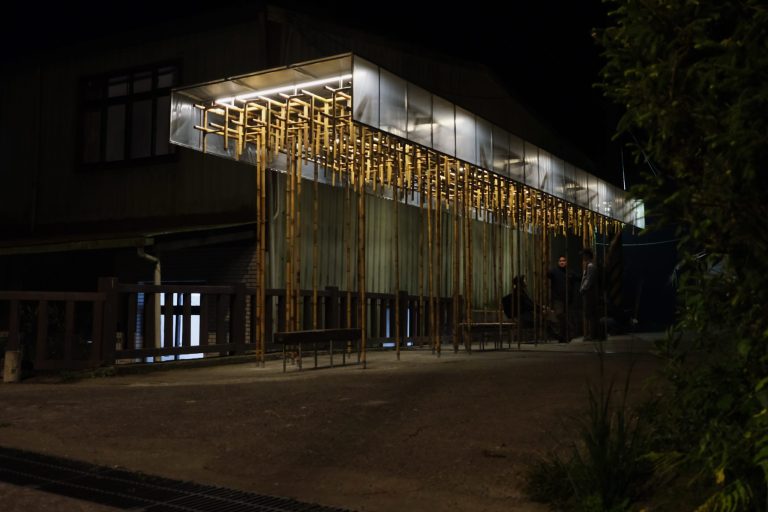
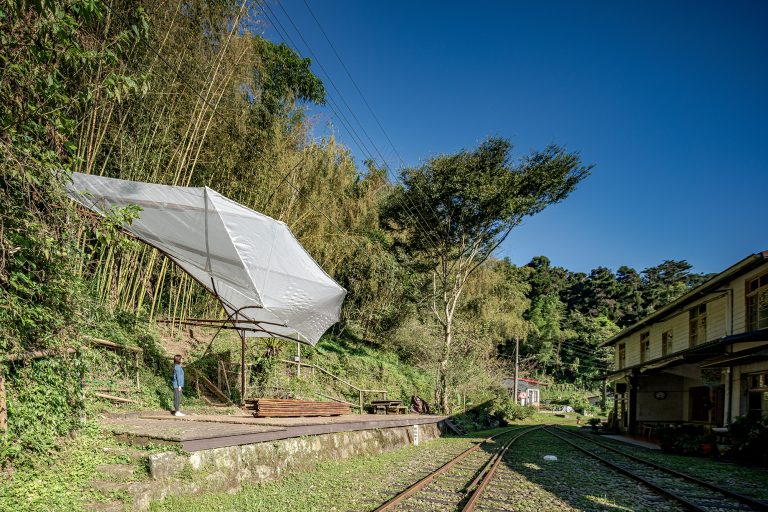
Through the efforts of architects Kan Ming-yuan and Lee Lu-chih, Taiwan Bamboo Society has launched a three-year bamboo design talent cultivation program. Entitled the "2021 Bamboo Architecture Forest Railway New Generation Exhibition," the first year will feature bamboo structures built along the Alishan Forest Railway in Chiayi this October to serve as related public facilities. The initiative aims to blend traditional spirit with modern thinking, bringing new spatial experiences and expanding the imagination for the application of domestically produced bamboo.
Six student teams and six architectural industry professional teams participated. Through experimental creation, the student category allowed architecture students to become familiar with the characteristics of domestic bamboo and explore the future potential of bamboo construction. Meanwhile, the professional category produced small-scale bamboo structures that balance practicality, social impact, aesthetics, and weather resistance, demonstrating the adaptability of bamboo construction to modern life.
Curated by structural engineer Kuan-Fan Chen, the "2021 Structural Bamboo Forestry Railway Emerging Exhibition" invited the following six architectural designers to participate: architect Ming-Hsien Wang, architect Wen-Yuan Peng, architect Che Wang, architect Yu-Hsin Yeh, designer Yin-Pin Fang, and designer Yu-Wen Chen.
Design and Location
Coming soon! The perfect stage of bamboo architecture
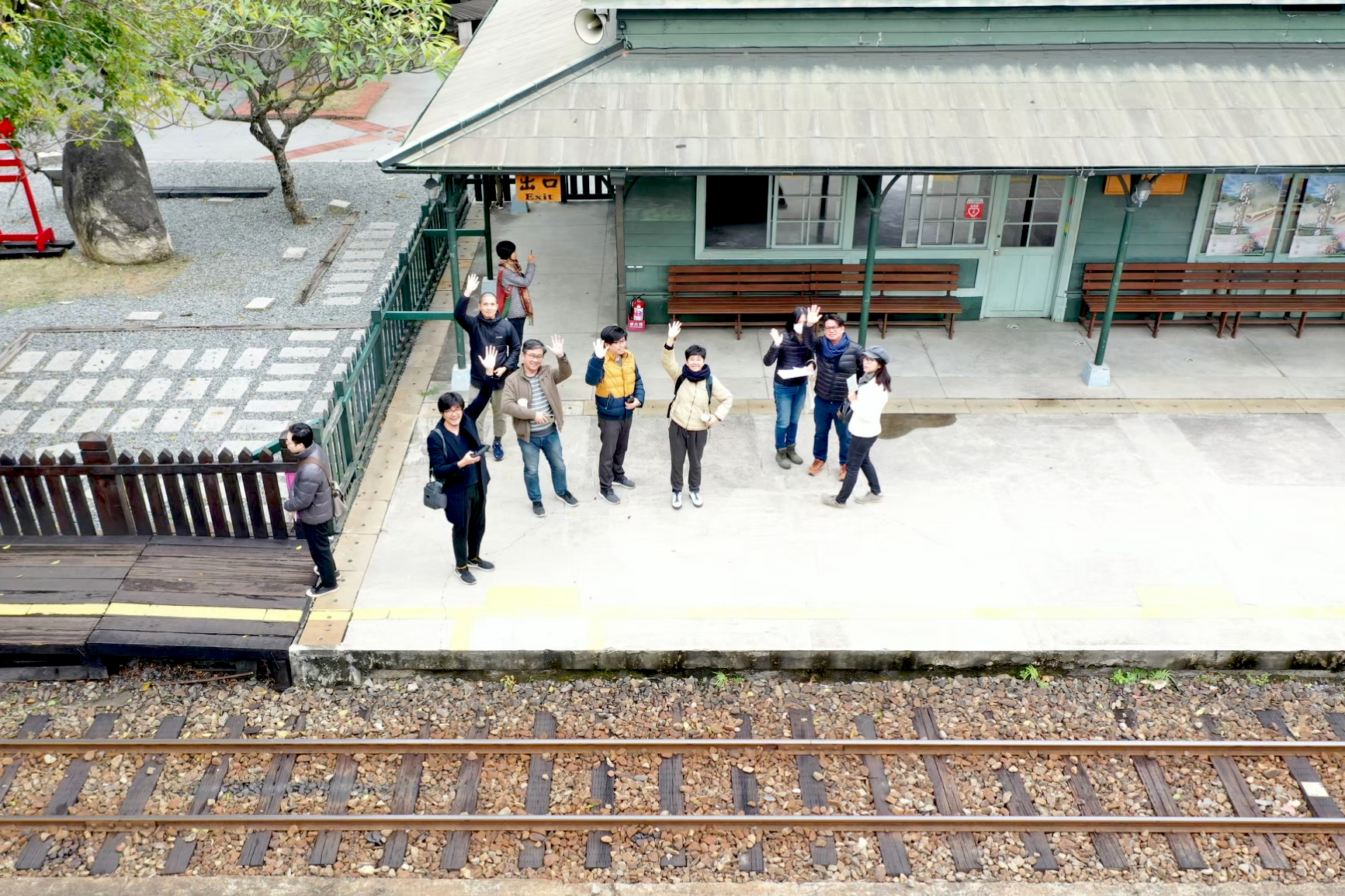
Zhuxi Station
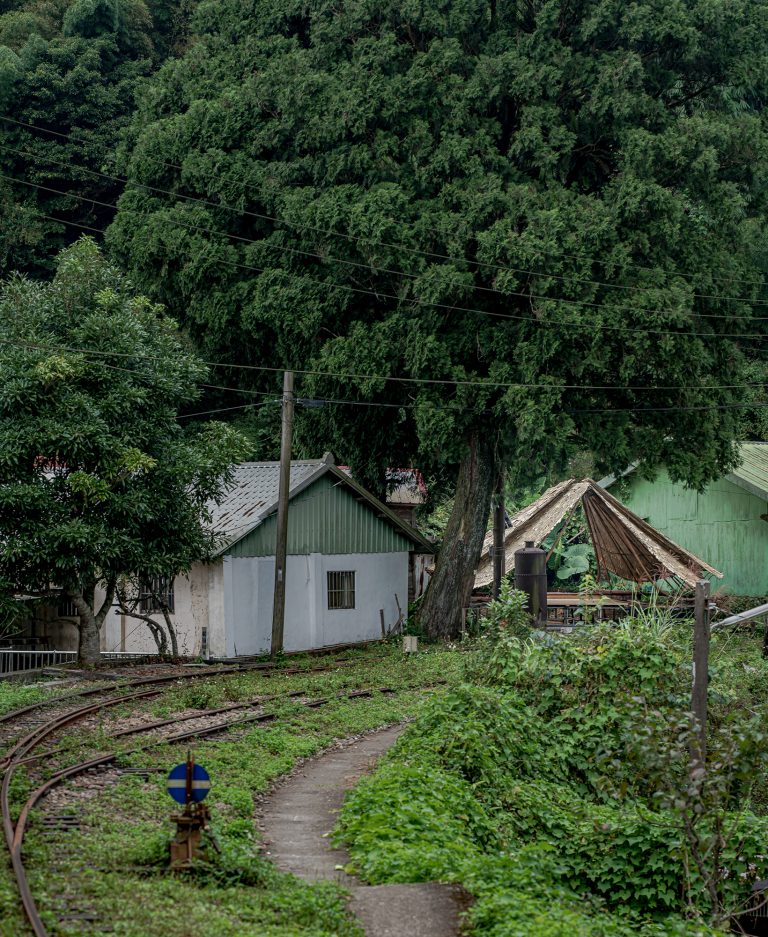
Bamboo Cape, formerly known as "Bhutouqi," is 14.2 kilometers from the starting point in Chiayi. At an elevation of 127 meters, it is the last station on the flat section of the Alishan Railway and also the starting point for mountain climbing on the railway. Originally built in 1910, it was renovated and remodeled in 1952 to become what it looks like today, with a strong Japanese flavor. (Text adapted from:Alishan Forest Railway and Cultural Heritage Office, Forestry Bureau Website)


Chiayi Sawmill
Completed and opened in 1914, it was the largest government-operated timber industry park during the Japanese colonial period. Responsible for storing timber logged from Mount Ali and undertaking the vital task of processing it into usable lumber, it is no longer operational today. Preserving numerous historic buildings and remains, along with a vast green space converted from Cypress Pond, it is a rare and culturally tranquil sanctuary in downtown Chiayi City. (Photo / Text adapted from:Alishan Forest Railway and Cultural Heritage Office, Forestry Bureau Website)


Proposal Meeting
Who is joining the meeting? Here is the list of attendees!
Chen Kuan-Fan, Structural Engineer / Prototype Structural Engineering Consultants Inc.
Chairman Kan Ming-Yuan / Taiwan Bamboo Society
Architect Li Lu-Chih / Da-Tsang and Associates Architects
Ming-Hsien Wang Architect / Ming-Hsien Wang Architect & Associates
Architect Peng Wen-Yuan / Atelier Neo.Arcadia
Architect Wang Che / Form 4 Design
Architect Yu-Shin Yeh / Chupoo Architects
Designer Fang Yin-Ping / Fang Yin-Ping Architects
Designer Yu-Wen Chen / Author of "From Bamboo to Bamboo House"


Curator's opening remarks
Structural Engineer Kuan-Fan Chen / Prototype Structural Engineering Consultants Inc.
The ultimate ideal of this curation concept is to create a "bamboo-constructed city," so it will focus on the integration of the city and bamboo. The goal is to explore the reuse and revitalization of bamboo construction materials through design. Therefore, it is crucial that every bamboo structure exhibited should demonstrate the expressiveness of a new structure. We hope to explore a new typology by leveraging the various properties of bamboo. The main focus is to weave together the textures formed by the Alishan Forest Railway encircling the mountains and the local culture, with the Chiayi Design Week serving as the primary axis.
The curation theme is called "new dimension," which signifies entirely new structures and dimensions. It uses six proposals to create a brand-new scale, and this is our vision. At the same time, it will be paired with the routes of the former forestry railway, with a three-year or five-year plan as the target.
Currently, all six architect teams have selected their sites and have preliminary proposals. Today's meeting is to discuss the feasibility of each team's proposal with architects Kan Ming-yuan and Li Lu-chih based on these submissions.