#: The Spirit Bird of Alishan—the Owl
Concept
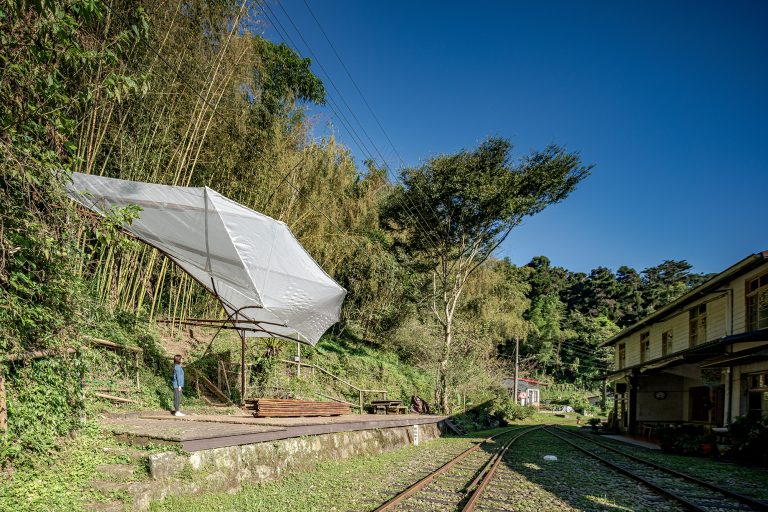
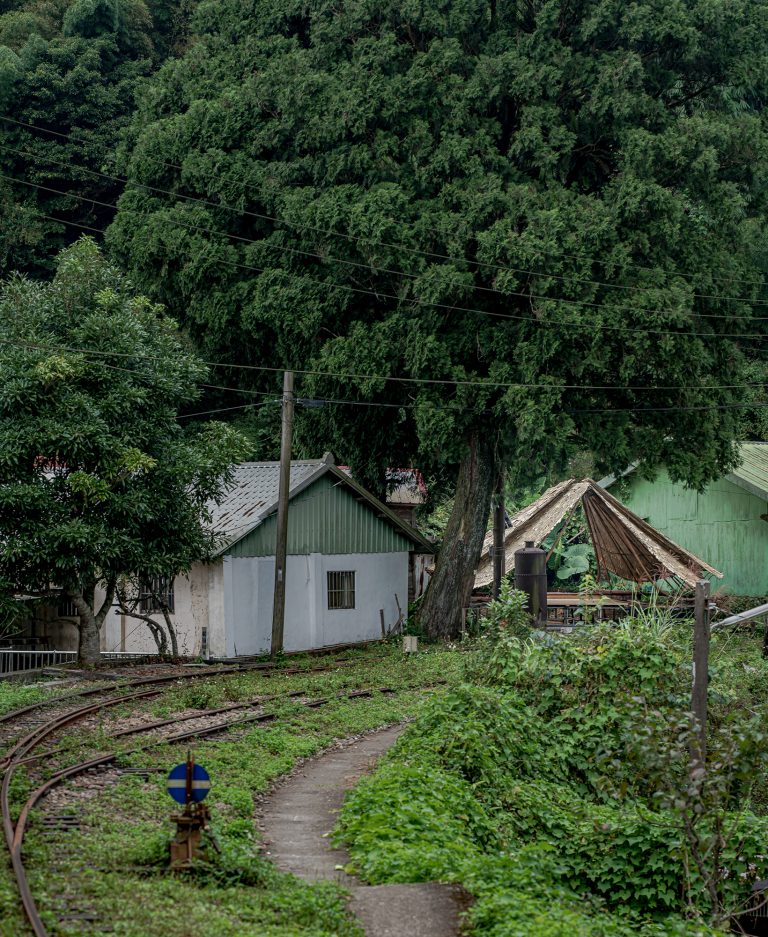
Zhuxi Station is located at the foot of Alishan and serves as the mountain-climbing starting point of the Alishan Forest Railway. Alishan has been the traditional homeland of the Tsou people since ancient times. According to Tsou legend, the owl was originally a monster that ate children, and its body resembled a large, round bamboo-woven enclosure.
One day, while a hunter was out, his child, who was home alone, was unfortunately eaten by a monster that broke into the house. When the hunter returned and saw that the monster had eaten his child, in his rage, he shot and killed it with a spear, and then hacked it into pieces with a knife. With every piece he hacked off, the flesh turned into an owl, and crying "Hoot! Hoot!", it flew away.
Later, the owl transformed from a monster no longer harmed the tribal people, but instead became a spiritual bird that heralded good news. When an owl hooted near a home, it foretold that the daughter or daughter-in-law of the household was soon to become pregnant.
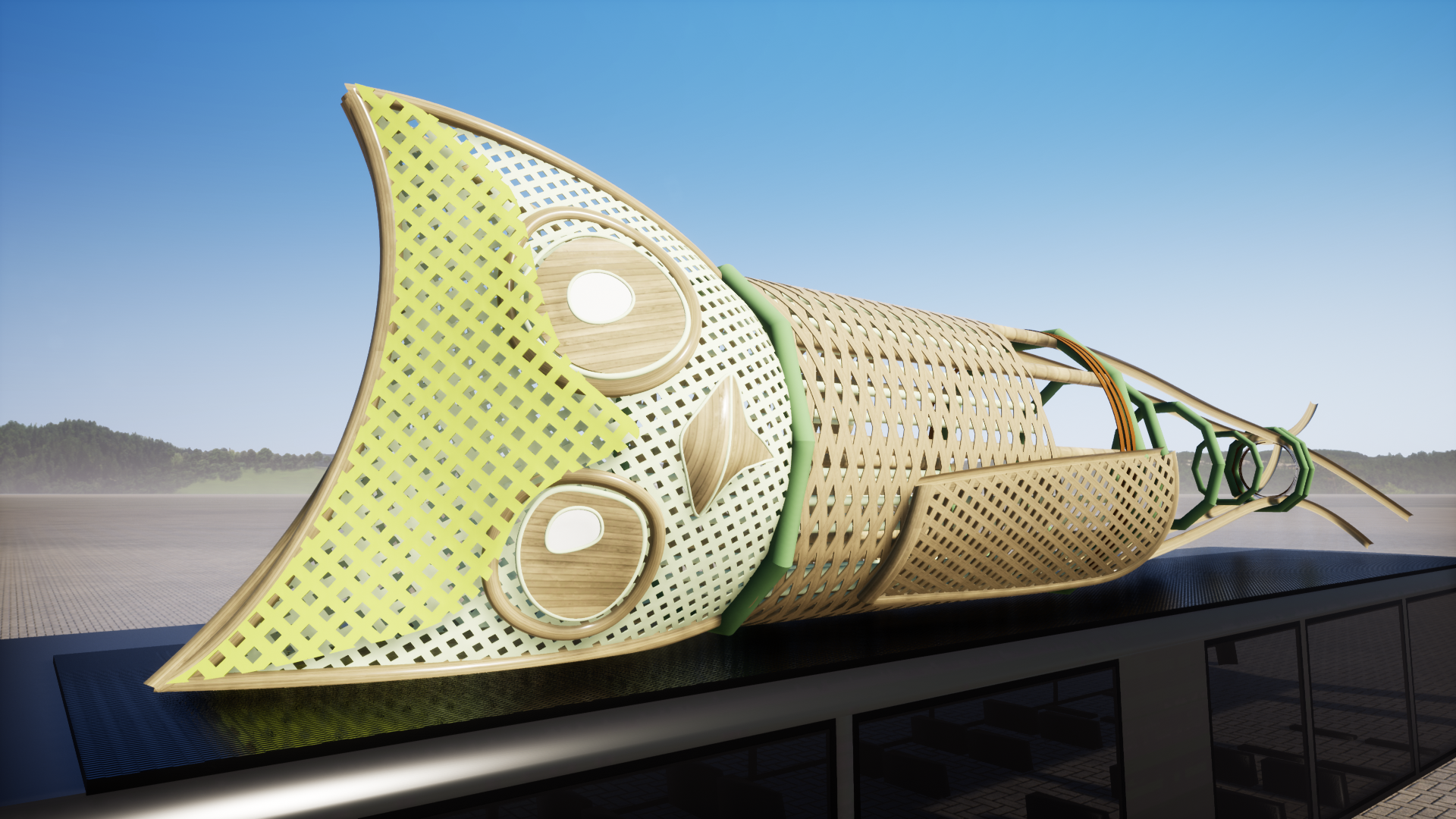
The artwork features an owl as its theme, using bamboo materials to create an enlarged owl skeleton. Bamboo weaving techniques are further applied to craft the owl's outer skin. Placed at the starting station where the railway officially enters Alishan, it welcomes travelers about to enter Alishan.

# Review
The artwork draws on local legend, where the owl was originally a negative symbol before transforming into a positive meaning, which is quite interesting. However, when translated into a design, it becomes an owl skeleton placed on a cart. This form might be too literal. Furthermore, its presentation is somewhat ambiguous; for example, in this pose, an owl usually stands, so what does a horizontally lying owl symbolize? The connection between the lying posture and the story you draw upon is unclear. The structural purpose is also not very obvious. The front features bamboo construction combined with bamboo weaving, making it look enclosed, while the back is open. Is this a space one can enter? Owls are very symbolic in Japan, representing good fortune, and hold a very high symbolic value there, whereas in Taiwan, public awareness is not as high. Yet, the current feel of the presentation seems unable to carry the meaning behind the myth. (Wang Wen-Hsiung)
What is your perspective on owls? What is it about them that attracts you? Even if it is an owl, what kind of owl is it? Are there any aspects of its habits or physical features that attract you? You could go further and research how to represent it, even if it's just the appearance. But right now, it is just a common impression of an owl. I want to encourage students—there is nothing wrong with being figurative. However, focusing on a figurative subject might require a bit more confidence to decide what you want to focus on, and how you might view it in a way that not everyone else would necessarily think of. (Fan Cheng-Tsung)
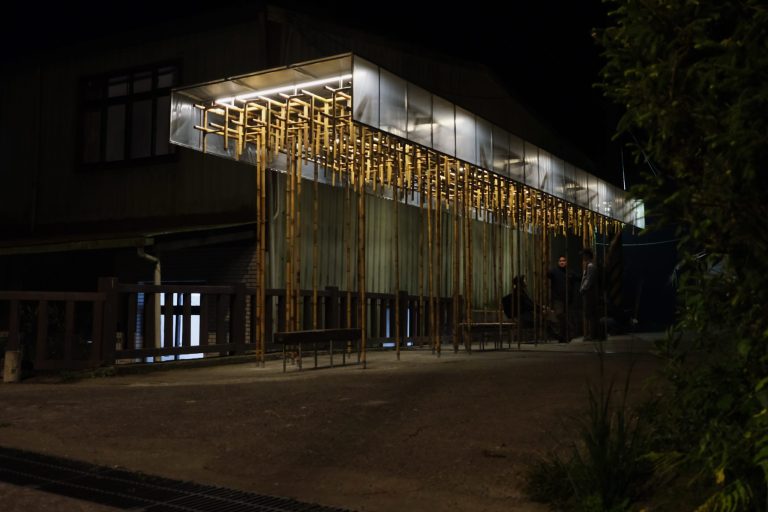
It is great that the students attempted to consider local elements and cultural issues. The two works happen to use different approaches: one is relatively figurative, while the other is more metaphorical. On the other hand, strategically speaking, the owl's skeletal skin has a better chance of forming a space. The initial intention of the other piece was not to form a space; it is more like an installation. What both works can improve upon is how the bamboo structure relates to the cart bed when placed on it. When we look at the works, we are not just looking at the part above the platform, but the part that together forms the whole with the cart bed. Since the platform is a very practical existence, how do the plane and the objects above relate to each other? You can think more about this. (Hsu Pei-Hsien)