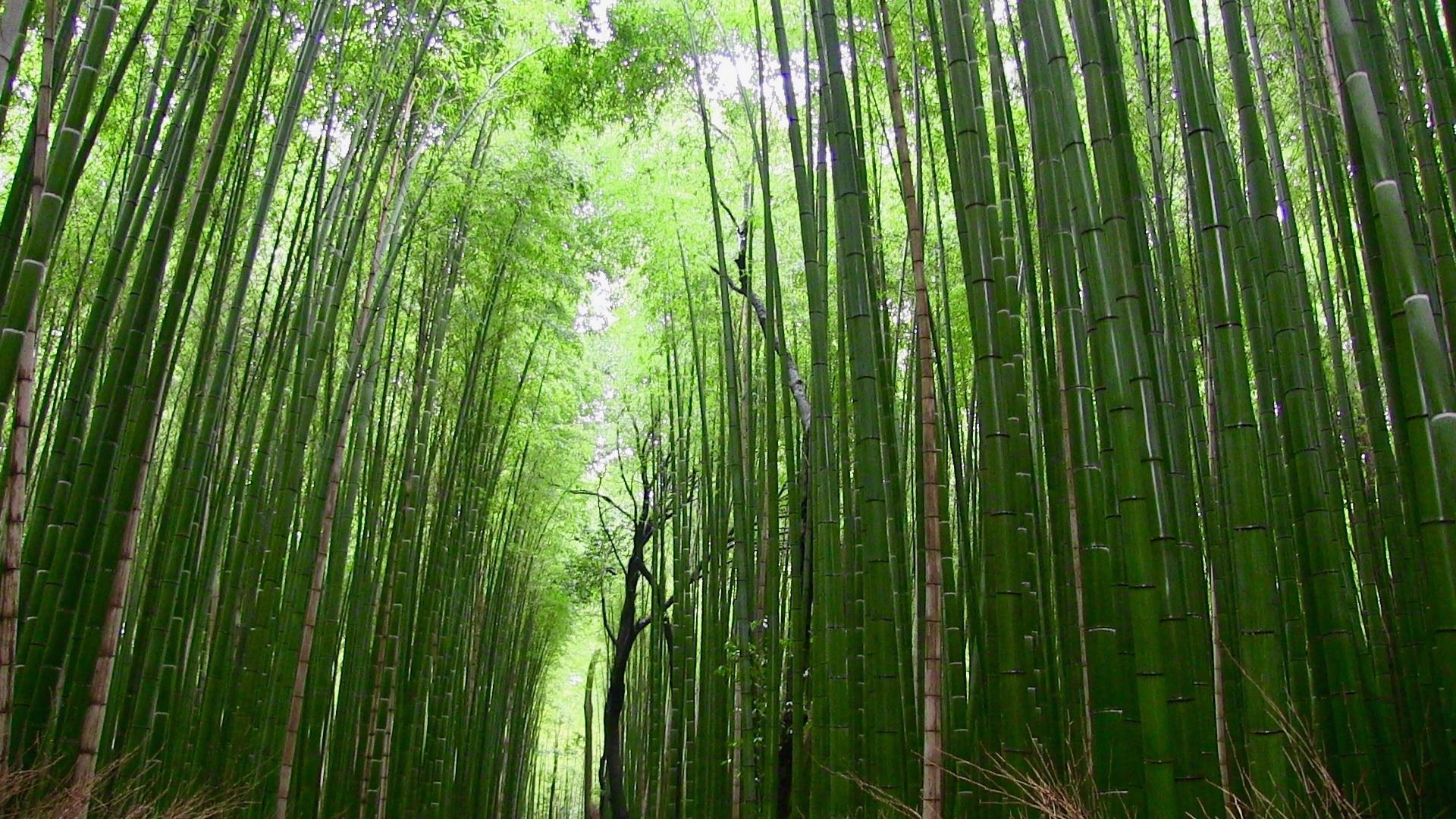
Can you name the six major bamboo species of Taiwan?
Not working? No problem, you'll easily remember it by connecting bamboo production with the industry!
Taiwan's six major economic bamboo species
Just how many species of bamboo are there in Taiwan? Lü Chin-ming's "Illustrated Guide to the Bamboos of Taiwan" alone records 89 species, 25 of which are native. Moreover, with the circulation of international goods, there are signs that the number of bamboo species in Taiwan is increasing. Among nearly one hundred species, the economic bamboo species commonly found in the Forestry Bureau's statistics are: Ma bamboo, green bamboo, Changchih bamboo, spiny bamboo, Kuei bamboo, and Moso bamboo.
Taiwan primarily classifies bamboo species based on their growth habits into two types: "clumping" and "running (single-stemmed)":
clumping bamboo species
Clumping bamboo, as the name implies, has its culms growing together in clumps, and the distance between the culms is usually relatively close.Example: Ma bamboo, green bamboo, long-branch bamboo, spiny bamboo.
running bamboo species
Running bamboo species are also known as monopodial bamboos. The culms grow individually and upright, with clear and distinct distances between them.Examples: Makino bamboo, Moso bamboo.
According to the Forestry Bureau's fourth forest resource survey report, the area ratio of sympodial bamboo to monopodial bamboo is approximately 2:1, with sympodial bamboo covering a larger area. The overall distribution is shown in the figure below:

Machu bamboo: Building houses and wrapping zongzi
Among the six major economic bamboo species, Dendrocalamus latiflorus is the thickest and longest. It is quite hard, high in starch, and high in sugar. In addition to being used for construction purposes such as scaffolding, its bamboo shoots are also edible. However, because of its high starch content, it is prone to insect infestation. Besides this, the leaves of Dendrocalamus latiflorus are also frequently used to wrap zongzi.
Green bamboo shoot: The sweetest among all bamboo shoots
Among the six major economic bamboo species, green bamboo is one of the least versatile, rarely used for weaving and similar purposes. However, green bamboo shoots have the highest sweetness and the most tender flesh; they are the primary bamboo species cultivated for bamboo shoots in Taiwan, and sweetness standards were even specifically established for green bamboo shoots to facilitate exports.
Long-branch bamboo: The origin of Tainan bamboo weaving
Among the six major economic bamboo species, Bambusa dolichoclada is commonly used for weaving. Because its texture is soft and elastic, it was the primary bamboo species used for bamboo weaving in early times in areas such as Guanmiao and Longqi in Tainan. Not only used for weaving, Bambusa dolichoclada was actually also one of the bamboo species used for papermaking in the southern region in early times.
Spiny bamboo: The preferred building material for border defense architecture
Among the six major economic bamboo species, Bambusa blumeana is the easiest to identify. True to its name, Bambusa blumeana features long thorns at every node. Not only that, because of its hardness and thick skin, it was the primary bamboo species used by early settlers as fences or town boundaries, often planted or sharpened as bamboo poles around settlements. In addition, it was also commonly used for papermaking.
Ma Bamboo: Recognized as an Excellent Weaving Material
Among the six major economic bamboo species in Taiwan, Makino bamboo has the highest production volume. Compared to Moso bamboo, Makino bamboo is tenderer and more elegant in texture, which is why Taiwanese bamboo craftmasters universally consider it the most suitable bamboo material for weaving. Even Japanese bamboo swords (shinai) are specifically required to be made from Taiwanese Makino bamboo, rather than the mass-produced Moso bamboo from China.
Moso bamboo: almost all bamboo charcoal is made from it.
Moso bamboo is the most common species used for bamboo charcoal among the six major economic bamboo species. Because it develops thick bamboo flesh in a short period of growth, it is widely used for firing bamboo charcoal and making bamboo furniture. Furthermore, it is one of the few bamboo species that shoots in winter, which is why Moso bamboo shoots are also known as winter bamboo shoots.
Bamboo almost never blooms?
The reason bamboo is called a plant that is "neither grass nor tree" is because it resembles a tall grass, and this special bamboo actually does flower!
According to numerous research statistics, the frequency of bamboo flowering is at least 10 years at the shortest, up to 60 years at the longest, or sometimes it never flowers at all throughout its lifetime. Therefore, bamboo does not reproduce and grow through flowers and fruits, but rather spreads everywhere by means of rhizomes creeping beneath the ground.
Next time you see bamboo blooming, be sure to take out your camera right away and photograph it from every angle!
Do bamboo shoots actually grow up to be bamboo stalks?
Bamboo shoots are actually bud sprouts growing from the underground stems of bamboo. If left alone, they will grow into bamboo stalks. Depending on the season, bamboo shoots sprout at different times, which is why they are categorized into spring shoots, summer shoots, autumn shoots, and winter shoots.
Common bamboo shoots in Taiwan sprout in spring and summer, with only a few, such as Moso bamboo, sprouting in winter. A brief classification based on research records of the seasons is as follows:
- Spring bamboo shoots: Moso bamboo, arrow bamboo, and stone bamboo.
- Summer bamboo shoots: Spiny bamboo, long-branch bamboo, green bamboo, and pachyman bamboo.
- Autumn shoot: Chimonobambusa quadrangularis.
- Winter bamboo shoot: Mosong bamboo.
What is special is that, in fact, depending on the harvesting method, it is possible to extend the production period of bamboo shoots. This harvesting method is usually carried out in summer, specifically targeting bamboo species with high culinary value such as green bamboo, allowing them to continue producing bamboo shoots until as late as November.