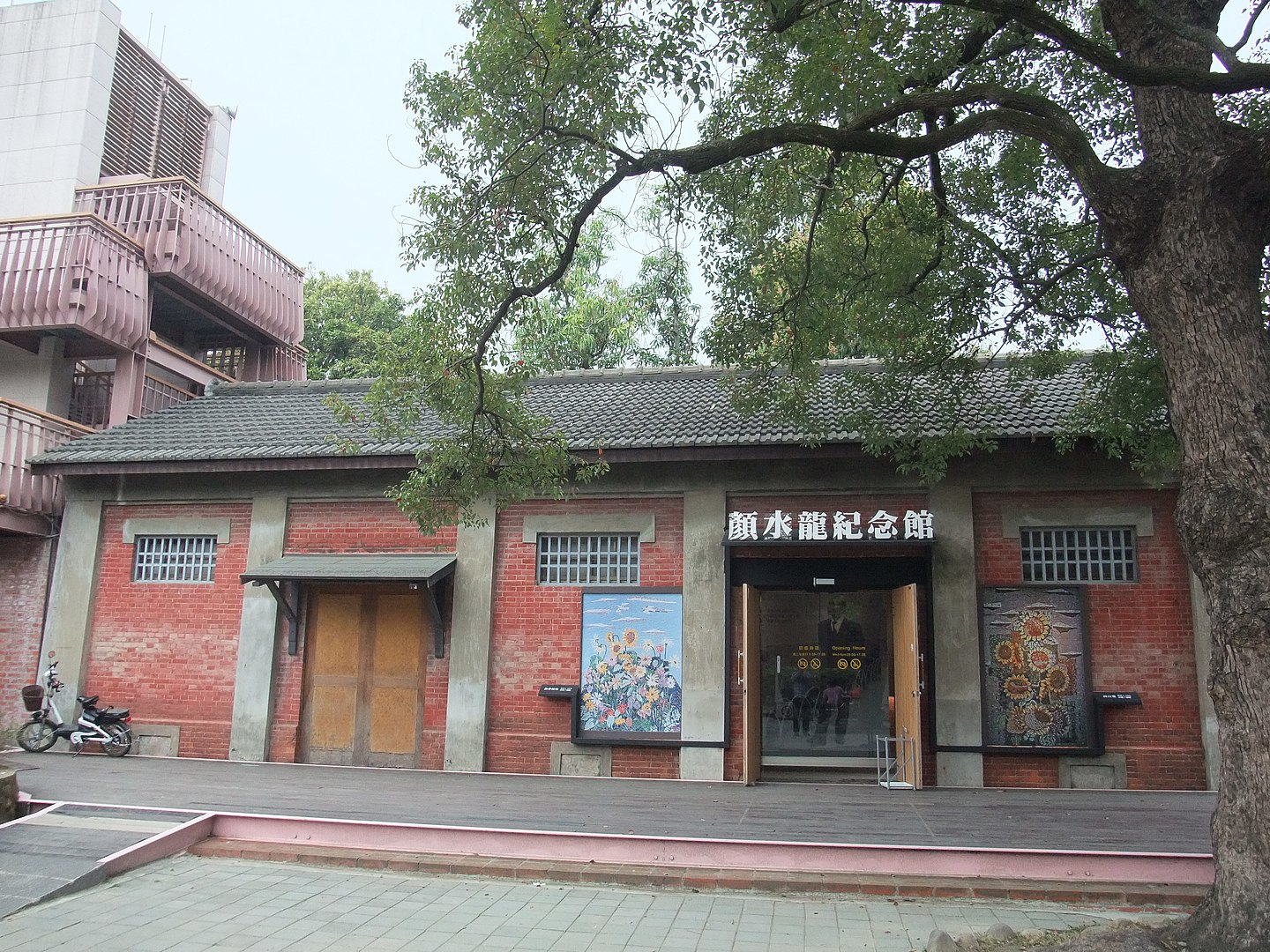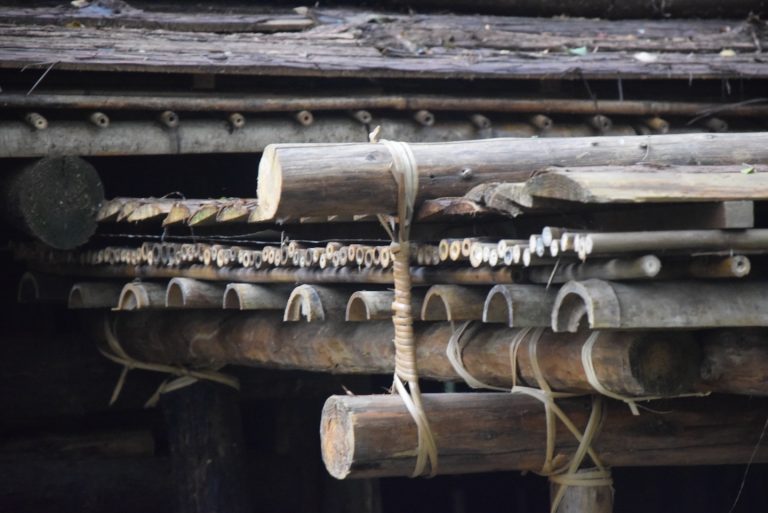
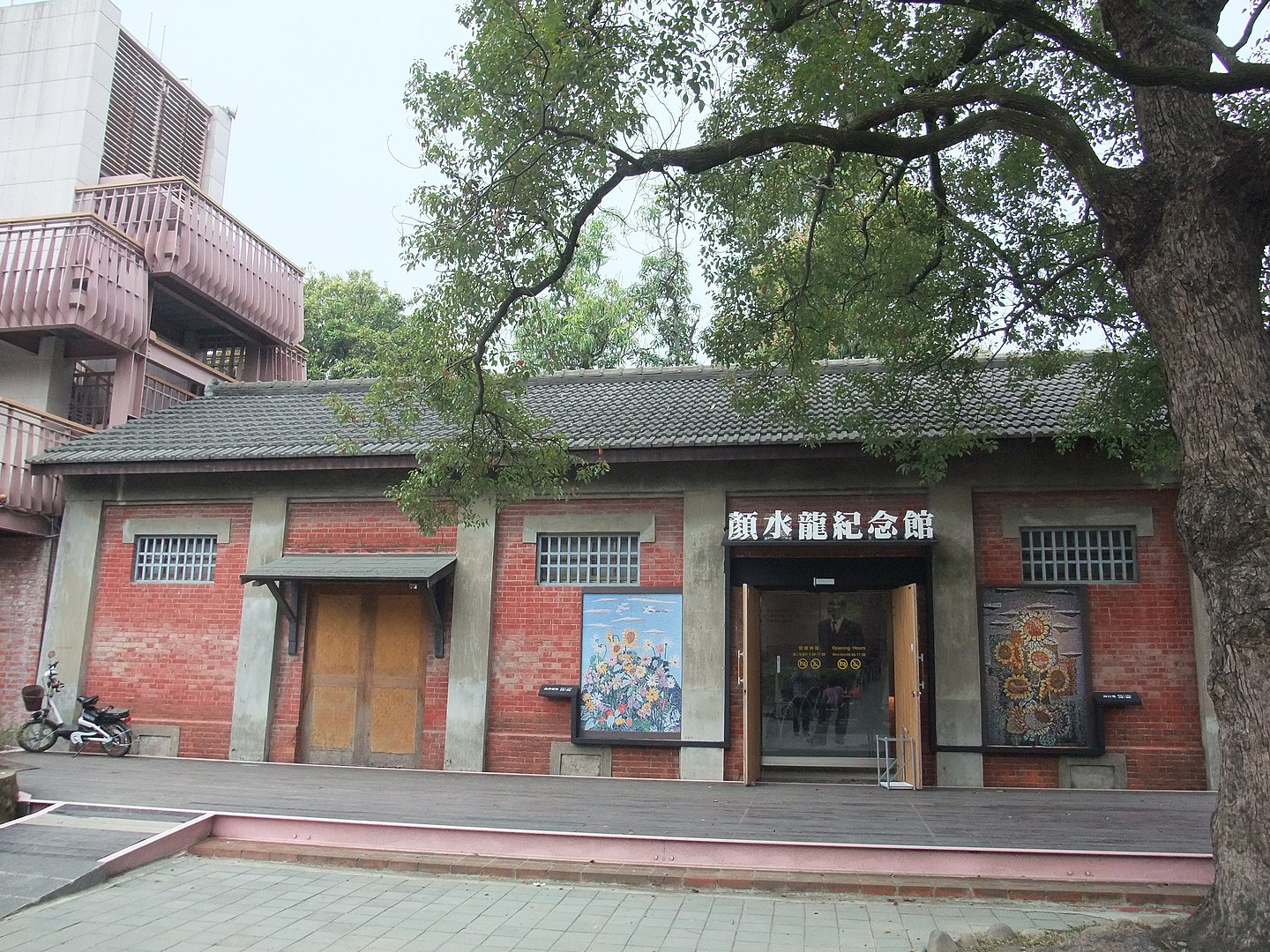
Between 1946 and 1969, Taiwan's bamboo industry entered a period of development focused on handicraft-based bamboo art. Behind this industrial development, aside from the technical assistance of the Wright brothers' team from the United States and the establishment of the Taiwan Handicraft Promotion Center and the China Productivity Center, was the endless passion for craftsmanship of one most important individual.
That person is Yen Shui-lung.
The life of the father of Taiwan's handicraft education
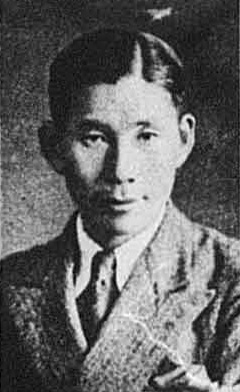
Yen Shui-long was born in 1903 in Maogangweisibu, Tainan (now Xiaying District, Tainan City). He was a famous Taiwanese painter and craftsman, as well as a driving force behind the development of various crafts in Taiwan after 1940. The most crucial opportunity for him to become the father of Taiwan's craft education was when he assumed the position of technical consultant for the Taiwan Provincial Department of Reconstruction in 1951.
In 1910, when Yen Shui-long was 7 years old, his parents passed away one after the other. Fortunately, Yen had good grades and enrolled in Xiaying Public School, graduating in 1915 to enter the Tainan Prefecture Teachers' Training Institute. In 1918, he returned to his alma mater, Xiaying Public School, to take up a teaching position.
In 1920, Yen Shui-long, who was working as a teacher, was encouraged by Takeo Sawada, a fellow faculty member at the same school, to go to Japan to study art. In 1922, through a work-study arrangement, he successfully passed the entrance examination for the Western Painting Department of the Tokyo Fine Arts School, where he studied under Takeji Fujishima and Saburosuke Okada, which deeply influenced Yen Shui-long's aesthetics.
Appreciated and funded by Lin Hsien-tang, Yen Shui-long did not return to Taiwan immediately to live after advanced studies in Japan. Instead, he went to France for further studies in 1929, during which his aesthetics were once again influenced by Jean Marchand and Joseph Fernand Henri Léger, and he befriended Kees van Dongen, from whom he learned decorative color techniques.
After studying in France, Yen Shui-龙 returned to Japan in 1933 and worked in advertising design at Sumoka Co., Ltd. in Osaka, becoming Taiwan's first professional advertising designer. At that time, advertising design was still produced by hand, which influenced Yen Shui-龙 to gradually move toward arts and crafts. Influenced by multifaceted aesthetic education from both the West and the East, the foundation was laid for Yen Shui-龙's emphasis on craft creation.
Returning to Taiwan to promote the development of the bamboo craft industry
In 1937, Yen Shui-lung returned to Taiwan with a wealth of experience in aesthetic creation and thinking, bringing back the plan for establishing an arts and crafts school at the same time. Without stopping for a moment, Yen founded the Taiwan Modeling Arts Association, the Nanya Craft Workshop, and the Tainan Prefecture Rush Product Production and Marketing Cooperative in his hometown of Tainan in 1941. Subsequently, in 1943, he established the Bamboo Craft Workshop, recruiting bamboo craftsmen to design and produce modern bamboo handicrafts.
In 1951, after the period of Japanese rule had ended, Yen Shui-long assumed the position of technical consultant for the Department of Reconstruction of the Taiwan Provincial Government. The following year, he was immediately invited by Nantou County Magistrate Li Kuo-cheng, along with Wang Ching-shuang, to hold the "Nantou County Specialty Craft Instructor Seminar" to provide basic craft training in bamboo weaving, rattan weaving, ceramics, and carving. This was subsequently extended into the "Nantou County Specialty Craft Training Class," resulting in a significant increase in bamboo craft talent in the central region.
In 1955, the Wright Industrial Design team, formed by the United States to advance diplomacy, began promoting craft education in Taiwan under the guise of improving the economy, leading to the establishment of the Taiwan Handicraft Promotion Center. Yen Shui-long and the Taiwan Handicraft Promotion Center began collaborating to conduct craft training classes in various locations such as Guanmiao, Budai, and Chiayi, causing bamboo craftsmanship to flourish everywhere in Taiwan.
Consequently, in the 1960s, handicraft cooperatives and experimental factories began to emerge in places like Guantian, Tainan, undertaking overseas orders to manufacture and export bamboo ware.
And Yen Shui-long's importance does not lie merely in his role as a technical consultant for a central government agency; more importantly, while serving as a consultant, he did not forget the connection between indigenous industries and lifestyles across various regions. Focusing on crafts that evolved from daily life, he selected Zhushan in Nantou and Guanhiao in Tainan to develop bamboo craftsmanship—decisions that were all based on Yen Shui-long's years of research into the development of Taiwanese crafts.
Regarding the early bamboo craftsmanship in Guanhua, Yan Shuilong had already analyzed that around 1906, there was already a lifestyle of self-sufficiency through weaving bamboo utensils, primarily focusing on agricultural and fishing tools. Therefore, developing bamboo craftsmanship in Guanhua, Tainan did not face many obstacles; instead, it directly allowed the local skills originally used for self-sufficiency to transform into an economic system.